
Growing the shop
Why showing the customer their design matters
People trust an embroidery design they can see on the color they picked. A text description leaves contrast, placement, and size to the imagination, and that is where orders stall or come back unhappy.
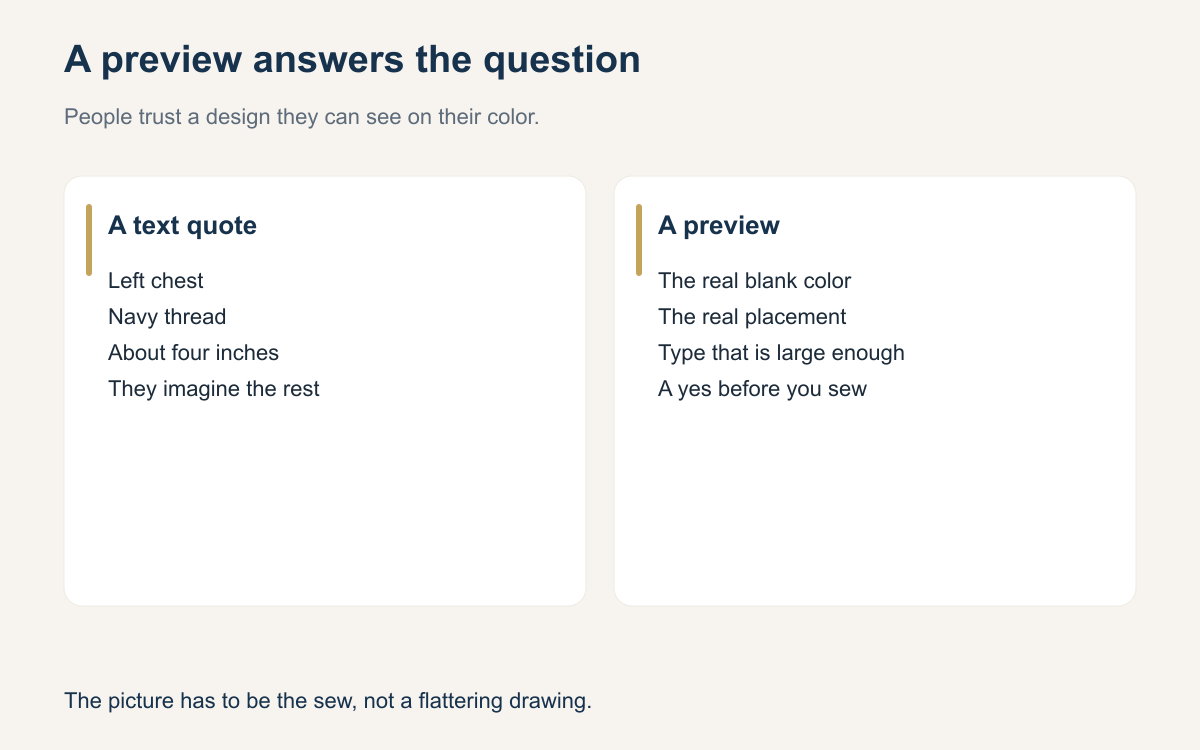
A buyer can love a logo in a file and still hesitate when it is time to pay for embroidery. They are not only buying stitches. They are buying a picture of themselves, their team, or their shop wearing the mark. If that picture exists only as a sentence in a message, they have to imagine the contrast, the size, and the place on the garment. Imagination is a weak way to take payment.
Showing the design changes the buy because it moves the decision from faith to sight. People trust a mark they can see on the color they picked. They can tell whether white thread will vanish on a sand cap, whether the chest logo crowds a pocket, and whether the words are large enough to read across a room. You already know those answers. The picture lets them know too, before you hoop.
A description is not the design they will wear
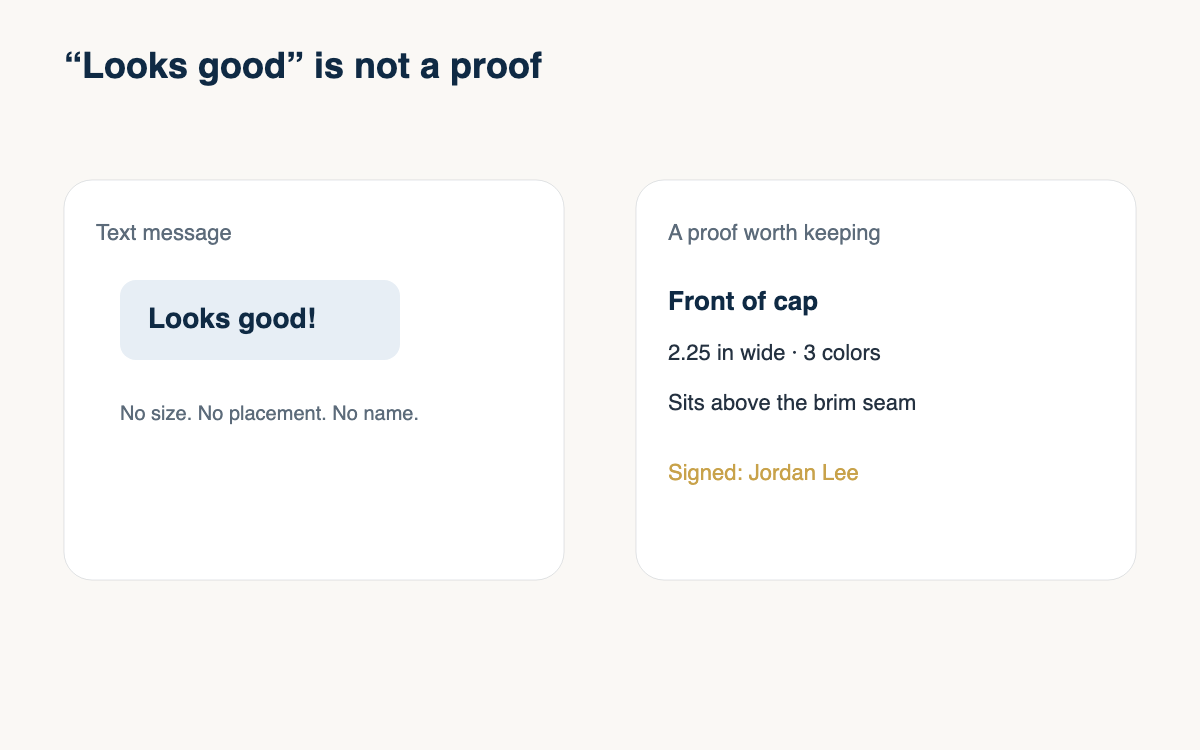
Left chest, about three inches, white thread, on the navy polo is a complete sentence and an incomplete proof. The buyer hears three inches and pictures a billboard or a speck. They hear white and picture a bright logo from a website, not stitches with an edge. You and the buyer can both be sincere and still be approving different shirts. That gap shows up as hesitation before payment, or as a complaint after delivery.
Replace the sentence with a picture at the size you will sew, on a photo of the blank or on a flat garment in that color. Name the width in the caption so the picture is not a trick of scale. If the art had to be simplified for thread, show the simplified version, not the original drawing. The thing they approve should be the thing the machine will attempt. Anything else is a story you will have to retell when the box opens.
The color they picked changes the whole mark
The same white mark looks sharp on navy and weak on sand. Gold on navy may need a different edge so it does not sink into the fabric color. A red logo on a red polo can disappear even when the file is perfect. Buyers often choose a garment color for a uniform reason, a school reason, or a brand reason, and they assume the logo will adapt. It will not adapt unless you show them the pairing and adjust it.
Make the color part of the approval, not a footnote. If they are deciding between two blanks, show the mark on both, even if one version is a quick photo with the art placed on top. Ask them to choose the pairing, not only the art. A buyer who has seen the weak combination will often pick the stronger blank without feeling pushed. A buyer who never saw it will blame the sew-out for a contrast problem that was visible on day one.
Placement is part of what they approve
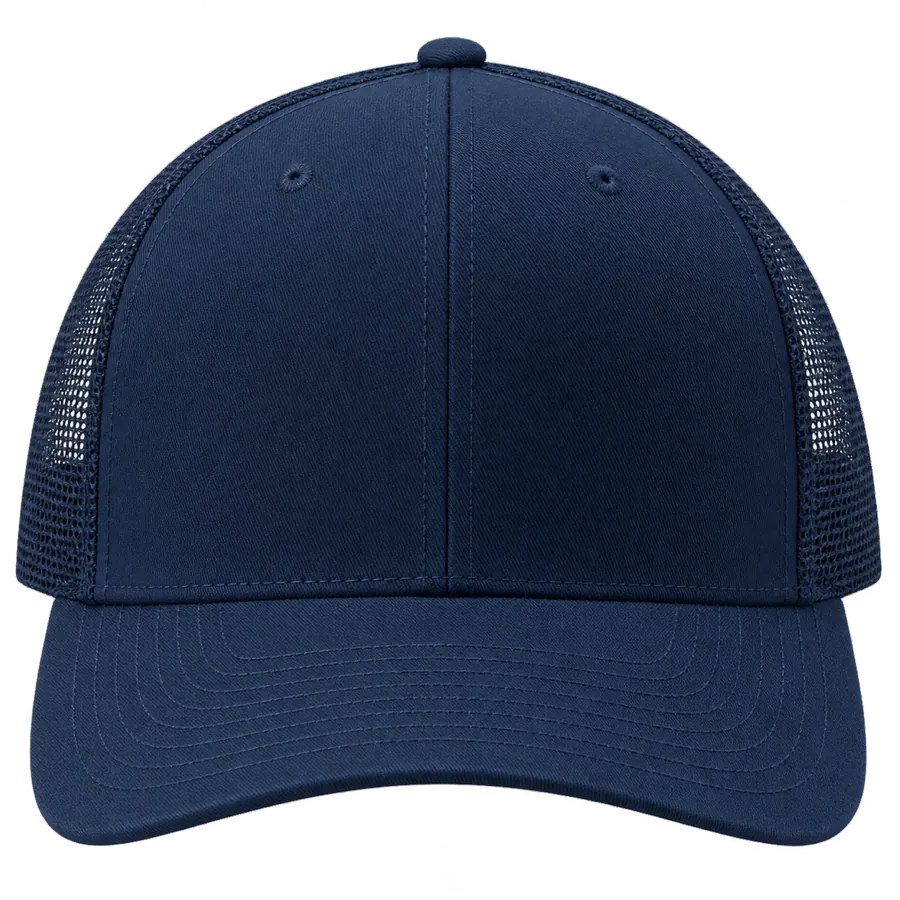
A logo centered on a square is not a placement. On a cap it may sit on the seam or climb into the mesh. On a polo it may collide with a pocket or a placket. Buyers do not know those limits until they see the mark on the garment. When you only describe the spot, they say yes to a word. When you show the spot, they say yes to a location you can hoop.
Show the design inside the area you are willing to sew, at the size you quoted. If they ask to move it onto a seam, the picture makes the problem obvious and the conversation stays about the garment, not about whether you are being difficult. Placement arguments after the sew are expensive. Placement arguments in front of a picture are cheap, and they usually end with a better shirt.
A picture prevents the fight after you sew
Most angry emails about a finished order are recognition failures. The hat is not what they held in their head. The thread color is more cream than white. The mark is smaller than the website header they stared at for a month. A picture sent before payment does not remove every risk. Thread and fabric still have texture. It does remove the class of surprise that comes from never having looked.
Keep the picture they approved with the order. If they write later, you can reply with the same image and a photo of the sew-out side by side. The talk becomes a comparison, not a duel of memories. Shops that skip this step spend the profit on reprints and on long messages. Shops that keep the picture spend a few minutes up front and sew with a yes they can point to.
Show the real blank, the art, and the size
A useful picture has three parts and no mystery. The blank is the color and style you will sew, or you have said plainly that it is a stand-in for that cut. The art is the version simplified for thread, not a print graphic you will reinterpret later. The size is labeled, so a photo taken up close does not pretend the mark is larger than the chest.
Send that picture before you take the money on any job where the buyer has not seen this pairing before. A reorder of an identical sew-out can point back to the old photo. A new color, a new placement, or a new line of text deserves a new look. You are not decorating a listing for fun. You are letting them trust a decision they can see, which is the whole reason the picture changes the buy.
- Use the garment color they are actually choosing, not a white sample by default.
- Show the art after you simplify it for thread.
- Mark the width so the photo is not a trick of scale.
- Keep the design off seams, mesh, pockets, and zippers in the picture.
- Save the approved picture with the order.
- Send a new picture when the color, the words, or the placement change.
Do not ask a buyer to fund a design they have to imagine. Put the mark on the color they picked, at the size you will sew, in the place the garment can hold. The yes that follows is faster, and the box that follows starts fewer fights. Sight is the courtesy. It is also the sales tool.
Seeing the design on the garment color is the point of a preview. On Stitchify Hub, a buyer places art on the product and color the shop set up, inside the area the shop allows. Saving that design asks the buyer to log in. The preview is what answers the question in this article.
A question for the group
On the last order that came back unhappy, had the buyer seen the mark on the color they picked before they paid?