
Growing the shop
Why customers abandon a custom embroidery order
A custom embroidery order often dies before anyone pays. Slow quotes, a blank with no picture, a price that arrives days later, checkout that demands a phone call, and a turnaround with no date are the stalls to fix first.
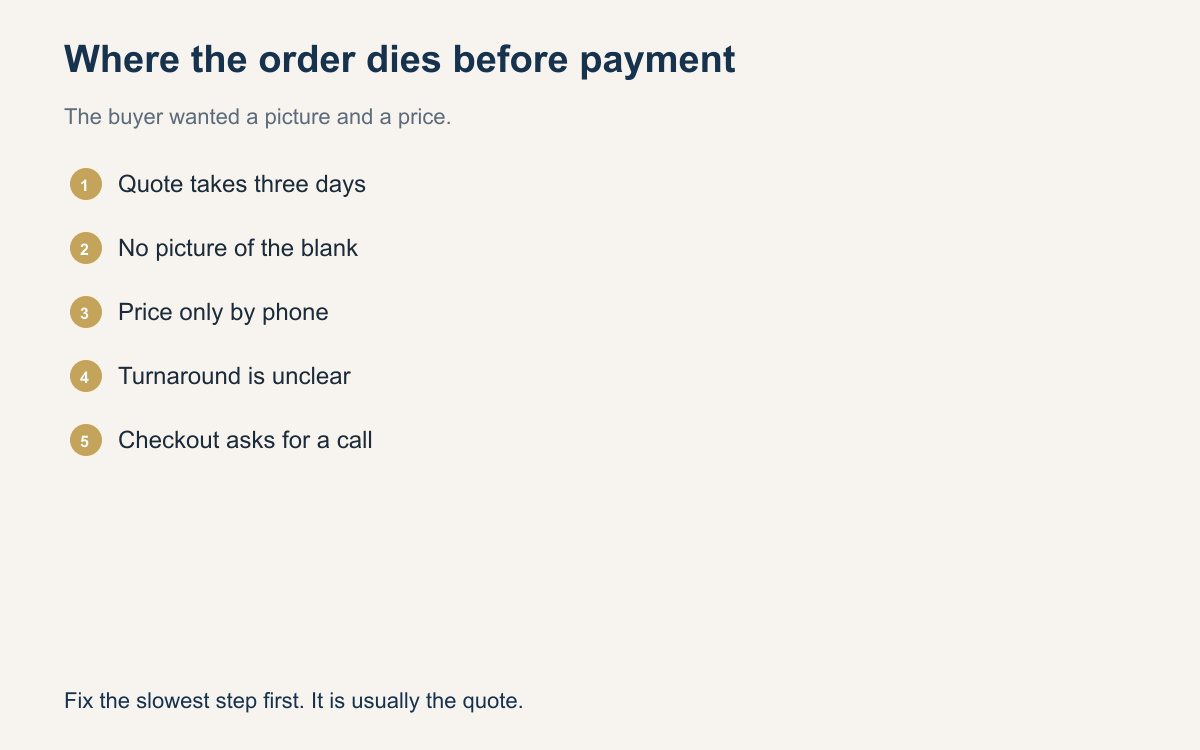
You do not lose every embroidery order on the machine. You lose a lot of them in the quiet stretch before payment. The buyer had a logo and a date. They were willing to pay a fair price for a hat or a polo with their mark on it. Then the next step was slow, vague, or hidden behind a phone call, and they hired a shop that made the next step obvious.
Custom work has more chances to stall than a stock shirt. You need art, a blank, a placement, a price, and a date. Each one can turn into a wait. The buyers who leave are not always hunting a discount. Many of them leave because they cannot picture the garment, cannot see a number, or cannot tell when it will ship. Fix the stall they hit first.
The quote that sits until they find someone else
A buyer sends a logo at night and asks what a navy cap would cost. A fast shop answers with a range or a firm price before noon, names the cap, and says the ship window. A slow shop answers with a promise to look tomorrow. By the time you have a careful number, the buyer has already paid the shop that was merely clear. A price you already use for that size and that blank can go out the same morning.
Count the hours from the first message to a number they can accept. If you need a file type, a placement, and a quantity, ask for all three in the first reply, in one note, not in a chain of single questions. A same-day price for a normal left-chest logo beats a perfect price on day three. Save the long estimate for the job that is actually odd: a full back, a photo, a garment you have never hooped. Say that out loud so a simple hat does not wait in the odd pile.
A blank they have to imagine
Words like structured cap or pique polo are clear to you and foggy to them. They are picturing a hat from a brand you do not stock, in a navy that is brighter than yours. That gap is enough to delay payment. People hesitate when they might be buying the wrong thing, and they leave when another shop shows a photo. A picture of the real blank is not decoration. It is how they decide.
Photograph the colors you actually sew, on the styles you actually keep. You do not need a studio. A clean photo on a table, front and side, is enough if the color is true. If you offer many colors and only three are in the bin, show the three and name the rest as the same style. Tell them what the picture does not show, such as a slight variation in dye lot. A buyer who can see the garment will ask better questions and will pay sooner.
A price that arrives three days later
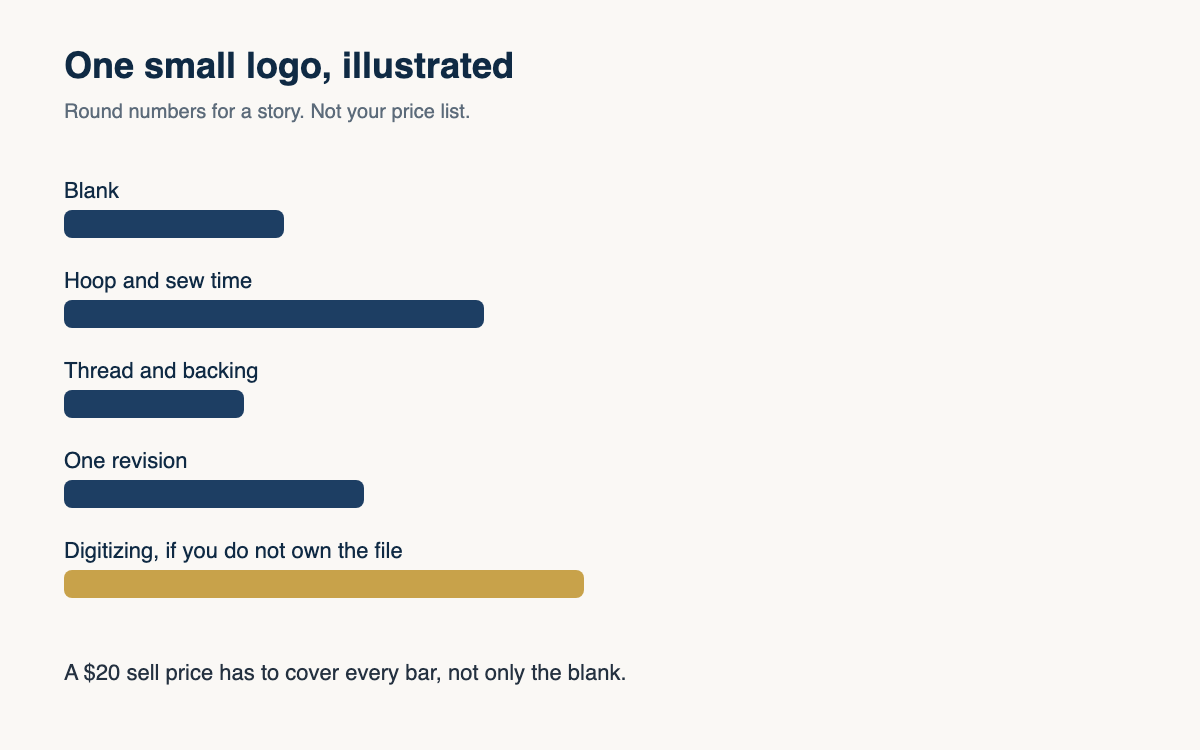
Three days is a long time on a custom order that felt urgent to the buyer. The delay usually comes from a habit, not from the stitch count. You wait to hear back from a digitizer before you will quote a one-location logo you have sewn a hundred times. You rebuild the price from scratch instead of using a chart. You answer the easy messages last. The buyer does not experience your care. They experience silence, and silence looks like a no.
Build a short price chart for the work you repeat: cap front, left chest, full back, a name under a logo. Include what the number covers, such as one placement, a simple mark, and your normal thread colors. When a job fits the chart, send the chart price the same day. When it does not fit, say why and name the day you will return with the number. A price with a sentence of scope is stronger than a bare number, because they can see what a later change would do to it.
Checkout that turns into a phone call
Call to order is a closed sign for anyone buying after work. They are on a phone, the house is loud, and they will not stop to talk through a hat. If your only path to payment is a live conversation, you have chosen to miss every buyer who is ready at the wrong hour. Some jobs do need a call. A complicated jacket, a regulated logo, or a huge order can be one of them. A standard cap with a clean file does not.
Put payment at the end of the decision, not in a separate errand. If you sell through messages, send a clear total and a way to pay in that same message. Do not make them repeat the color, the quantity, and the placement on a form after they already typed it. Every repeated question is a small exit. Keep the call for the moment you are truly stuck, and let the ordinary order finish while you are asleep.
Turnaround they cannot put on a calendar
About a week means a different day to every person. One buyer hears Friday. Another hears sometime next week, maybe. If you are also waiting on a blank, the week starts when the carton arrives, not when they asked. They cannot plan a team meeting or a shop opening around a mood. Unclear timing is a reason to leave even when the price was fine, because a late surprise feels more expensive than a higher price with a date.
Give the window in business days, and name what moves it. Art that is still a photo, a blank you have to order, and a change after they approve are the usual movers. A sentence such as seven business days after art approval and blank arrival is plain enough to plan on. People will wait for work they trust. They will not wait inside a date that keeps sliding with no new fact. Update them when a fact changes. Silence after a promise is how a first order becomes the last.
- Reply the same day with a price or with every question you still need.
- Show a photo of the blank you will actually sew.
- Use a chart price for the placements you sew every week.
- State turnaround in business days and name what delays it.
- Let a standard order pay without a phone call.
- Save the long quote for work that is actually unusual.
Look at the last few orders you lost and mark where they stalled. Do not start with a new logo for the website if the real leak is a quote that waits until Thursday. Fix the first friction the buyer hits. A same-day price, a photo of the blank, and a date they can repeat back to you will keep more work in the shop than any slogan about quality.
A question for the group
Which stall is costing you orders right now, the slow price, the missing picture of the blank, or a checkout that waits on a phone call, and what will you change this week?