
The business
What belongs on an embroidery shop price list
A useful price list tells a buyer the sew price, the setup, the new-file fee, and the work you will not do. A list of stitch counts alone starts an argument.
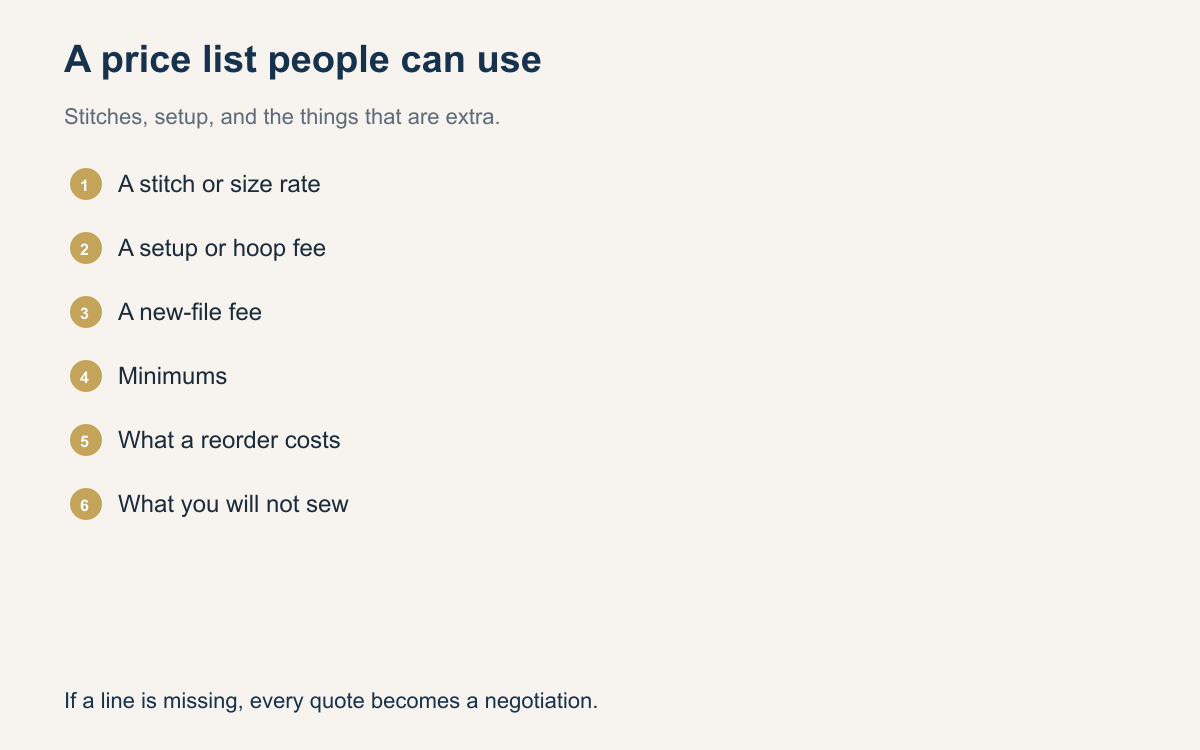
Customers ask for a price list because they want to know if they are in the right shop before they send a logo. A list that only says “prices vary” wastes that moment. A list that publishes a single stitch rate and nothing else also wastes it, because the rate is not the price. Setup, a new file, a cap frame, and a one-piece order all change the number. If those are missing, you will spend the quote explaining exceptions that are actually your normal work.
You do not have to publish every number you use. You do have to publish enough that a serious buyer can tell a twelve-piece polo from a single new logo on a hat. The rest can be “we’ll confirm on the art.” A price list is a filter. It should attract the jobs you want and warn off the jobs you always lose money on.
Show the sew in a way people can estimate
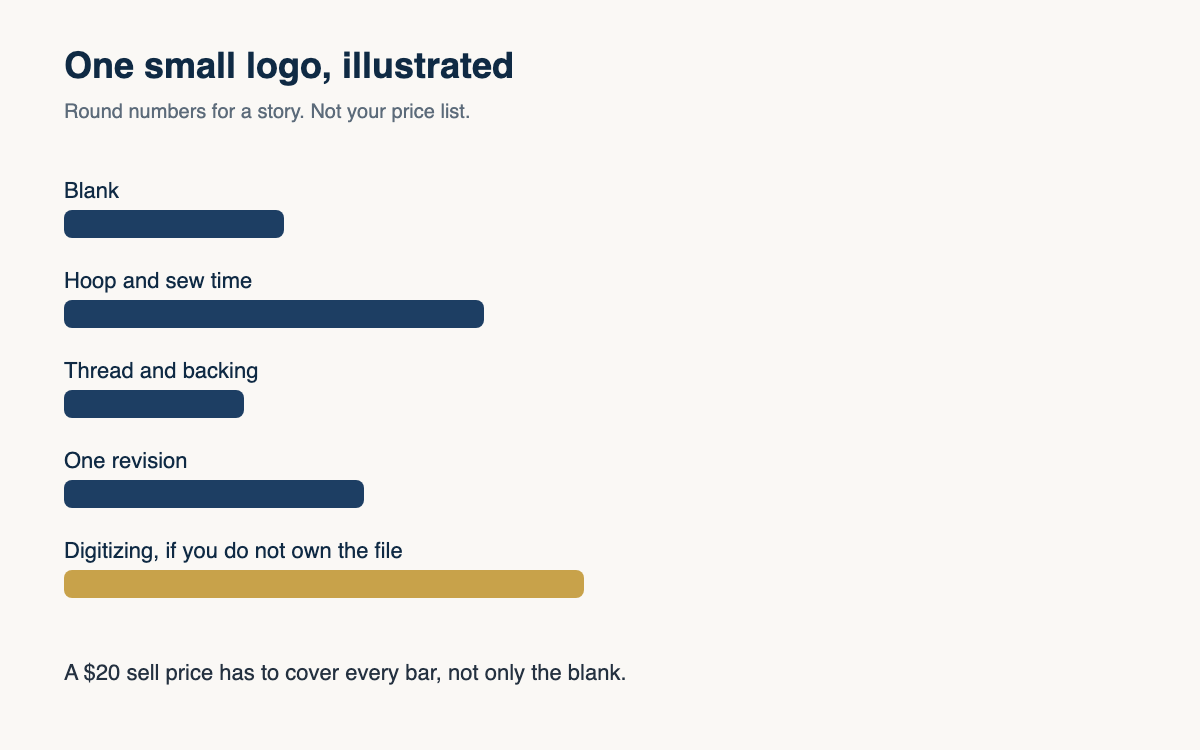
Some shops publish a stitch-count table. Some publish prices by design size, because buyers can picture four inches more easily than eight thousand stitches. Either can work if you say what it includes. “Sewing only, per piece, for designs we already have on file” is a different table from “includes one new logo.” Label it. An unlabeled table will be read in the way that makes your quote look like a bait and switch.
Include the blanks you actually sell, or say clearly that blanks are extra and give a range for the hats and shirts you stock. A sew price with no blank price is not a price a team mom can use. If you do not want to publish blank prices because they move, say “blanks at cost plus” or “we quote the garment with the art” and then answer quickly. A price list that cannot produce a number within a day is a brochure.
Setup, minimums, and new files
Put a setup or hooping fee where a single piece would not cover the time, and a minimum order where you have decided small runs are not worth starting the machine. These are not gotchas if they are on the list. They are gotchas if they appear only after the customer has designed a hat in their head. A digitizing fee for new art belongs on the same list, with one sentence about reorders: same design, same type of placement, no second file fee.
Say what changes the sew price. Extra thread colors, a cap versus a flat garment, metallic thread, appliqué, and personalization of names are the usual ones. You can write “names: add this much per item” without listing every font. You can write “metallic and appliqué quoted on the art” if you do not want a number you will regret. Silence is what makes people assume those are free. They have never hooped a cap or babied metallic thread. Your list is allowed to teach them.
Write the no’s next to the yes’s
The most useful line on some lists is the one that says what you will not sew. Customer-supplied garments, photographs, tiny type below a size you name, or art you cannot simplify. You will still get asked. You will get asked less, and you will have a page to point at instead of a fresh apology. A no that is written down feels like a shop standard. A no that appears only in a message feels like you do not want their business.
Also say how long a normal order takes and what a rush costs. Turnaround is part of the price. A buyer comparing you with a shop that sews faster will not see that in a stitch table. “Standard is this many business days after art approval. Rush is a fee and only when the schedule allows.” That sentence prevents the order that was always going to be late. If you do not offer rush, say that too. Clarity is kinder than a maybe.
Keep the list where the quote starts
A price list in a folder nobody opens will not save you. Put the public version where inquiries start, and keep a fuller version next to whoever writes quotes. When your costs move, change the list. A list from three years ago is a promise you did not mean to make. Date it. If a buyer shows up with an old screenshot, you can point at the date instead of debating whether you “used to do it cheaper.”
Use the list as the first draft of the quote, then adjust for the art in front of you. The list is not a contract for a logo you have not seen. The sentence under the table can say that: “Final price follows the artwork and the blank. This is what typical jobs look like.” Typical is the word that lets you charge more for a nightmare crest without looking like you invented a fee. The nightmare still needs a reason. The list gives you the normal case so the reason is visible.
- Label whether published prices include blanks, sewing only, or a new file.
- Show setup, minimums, and a new-logo fee.
- Say that a true reorder does not pay the file fee again.
- Name the extras: caps, names, metallic, appliqué.
- Write the jobs you do not take, and the normal turnaround.
- Date the list and keep the quote version next to the person who sends numbers.
A price list is not your whole pricing system. It is the part a stranger can read without you on the phone. If that part hides the file fee and the setup, your phone calls will be spent repairing the list. If it shows them, the calls will be about the artwork, which is the right conversation.
Pull up the page or the sheet you send people. Add the missing line, the one you are tired of explaining. That single line is the update that pays for the afternoon.
A question for the group
What do people always assume is included in your price, and is that assumption written down anywhere they can see it before they ask?