
Growing the shop
How to turn one embroidery order into the next
A repeat embroidery order starts with three notes you write before you forget: the person, the blank, and the file. A seasonal reminder and an easier second checkout beat a discount you cannot afford.
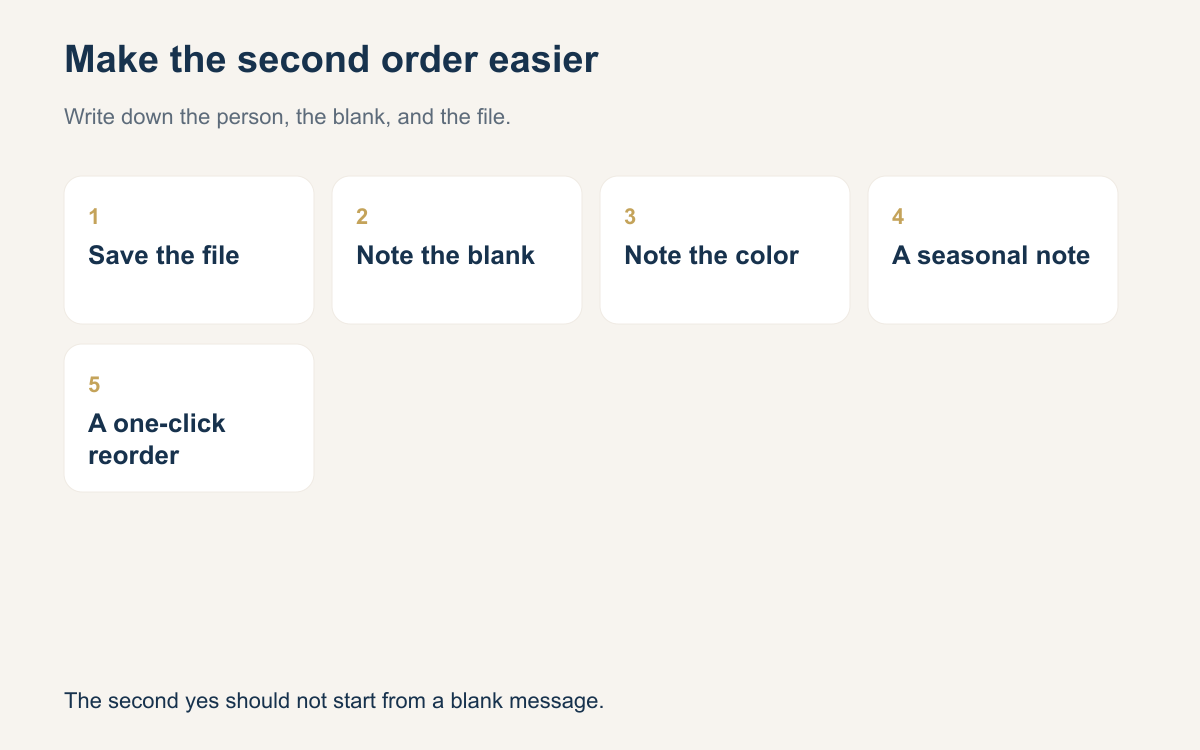
The second order is usually cheaper to win than the first, and most shops throw that advantage away. You sewed the logo, matched the thread, and learned which cap the buyer actually liked. Then you shipped the box and kept none of it in a place you can find in August. Next season they describe the whole job again, or they do not call, because starting over feels like work.
You do not need a complicated system. You need three lines written down while the order is still on the bench: who the person is, which blank you sewed, and which file ran clean. A reminder at the right month, and a second order that asks only what changed, will bring more work back than a coupon that trains people to wait for a sale.
Write down the person who ordered
The payment name is not always the person you should call. A booster parent pays. A coach approves the art. An office manager reorders polos when someone is hired. Write the name they go by, the organization, and how they like to be reached. Note who is allowed to say yes to a design if that person is not the one who paid.
Write one human detail you will still understand later. The under twelve soccer team in navy. The realty office that wants the house icon small. The salon that reorders black towels every quarter. Skip nicknames you would be embarrassed to read aloud. Keep the detail that tells you which season matters. A one-time baby gift may never repeat as that design, and the giver may still come back for the next shower if you remember the person.
Write down the blank they already liked
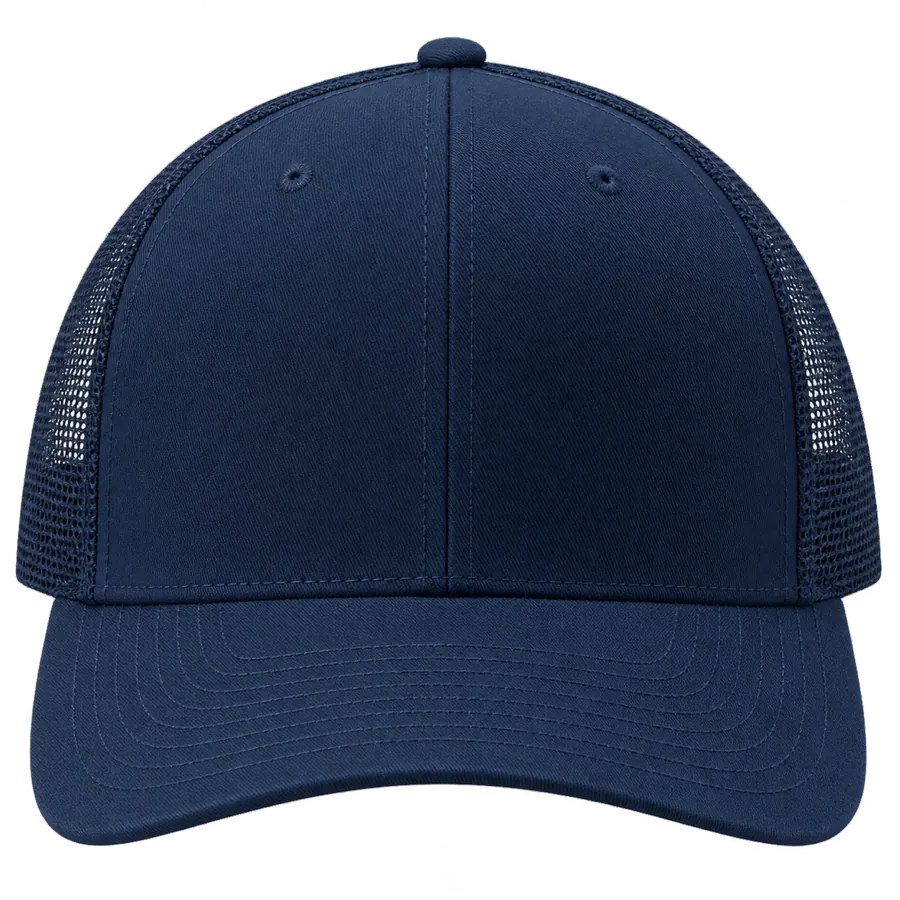
Buyers rarely remember a style number. They remember that the hat was structured, the navy was not too bright, and the polo did not feel cheap. You remember the mill and the color code, if you write them down. Next year, do not make them shop the catalog again. Name the blank you sewed and confirm it is still available.
Record the color, the style, and the sizes you actually shipped, not the sizes they first guessed. If you substituted a blank because the first choice was out of stock, write the substitute and whether they were happy. A reorder of the wrong hat feels like a new risk. A reorder of the hat they already wore feels like a simple yes. That difference is a note, not a talent.
Keep the file you can sew again
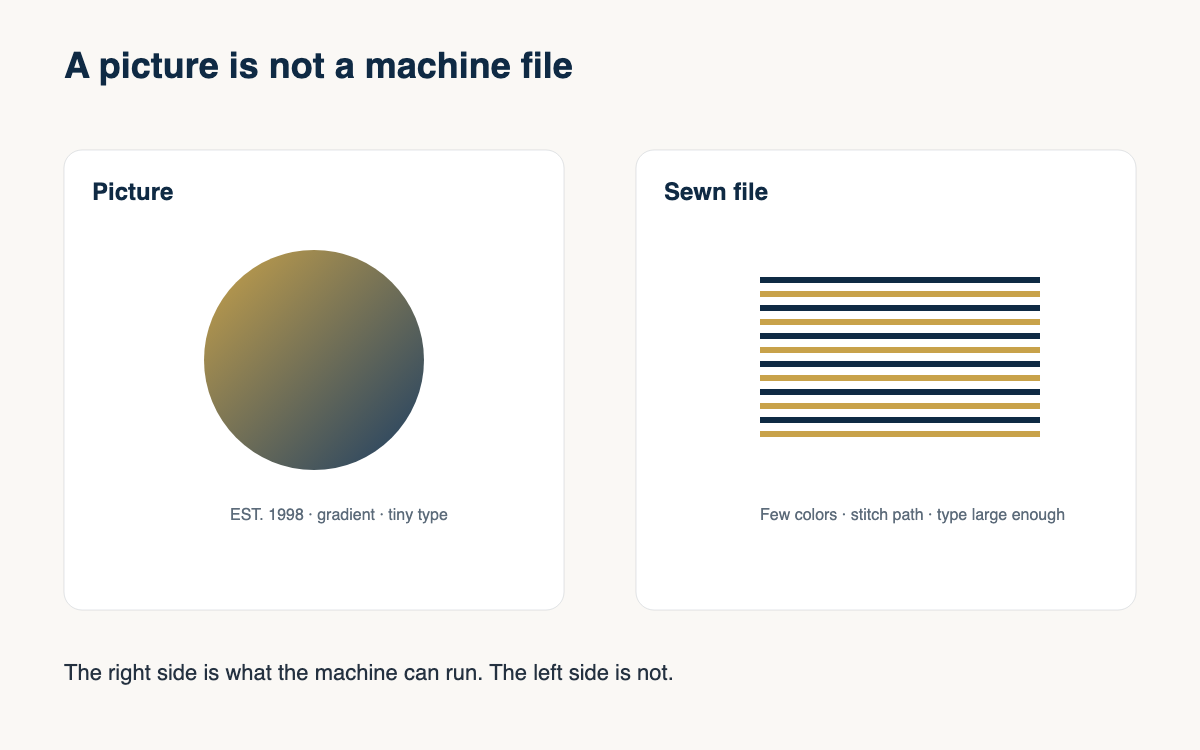
A logo in a camera roll is not a file you can hoop. Save the version that ran, with a name you can search: the organization, the placement, and the year. Next to it, write the width, the placement, and any thread colors you matched on purpose. If a digitizer owns the sew file and you only have a picture, write that down too, so you do not promise a reorder you cannot produce.
When they ask for the same thing, you should be able to open one folder and see the last good run. Do not spend the first day of a reorder hunting through messages for an attachment named final final. If the art changed, keep the old file anyway. People often come back to the version that already looked right after a season of trying to improve it.
Send a reminder when the season returns
Teams reorder before practice starts. Shops that sell to schools feel this in late summer. Real estate offices reorder when they hire, which is less of a calendar and more of a habit you can still ask about. Clubs have a banquet. Salons run through towels. Pick the month that matched the last order and put a reminder on your own calendar, six weeks earlier than they will panic.
The note can be short. Send a photo of what you sewed, the blank name, and a price for the same placement at a few quantities. Ask what changed. Do not attach a novel. Do not pretend you are a different company. A buyer who already trusts the sew-out needs a nudge and a number, not a tour of your services. If they said not to write them, do not write them. The reminder is a courtesy to people who want the next order to be easy.
Make the second order shorter than the first
The first order was a project. The second should be a confirmation. Do not make them upload the logo again, reexplain the font, or rediscover which cap you used. Show the photo, state the placement and the price, and ask for quantity, sizes, and the date. If a name list changed, that is the only new art. Everything else stays.
Easier is not the same as cheaper. You already paid the learning cost in the first sew-out. A fair price on a known file is still a fair price. What you remove is friction: fewer questions, a faster date because you know the stitch count, and no speech about how embroidery works. The buyer should feel that staying with you is the simple path, and leaving would mean explaining the hat to a stranger.
- Write the person, the organization, and who approves the art.
- Write the blank style, the color, and the sizes you shipped.
- Save the sew file with placement, width, and thread notes.
- Put a reminder on your calendar ahead of their season.
- Send a photo and a price, and ask only what changed.
- Keep the second price fair. Remove steps, not the value of the work.
Before you pack the next box, spend five minutes on the three lines. Person, blank, file. Then put a date on the calendar for the reminder. The shop that wins the reorder is rarely the one with the loudest ad. It is the one that can say, here is what we sewed last time, here is the price, tell me the sizes.
A question for the group
Which repeat buyer are you most likely to lose this year because the blank and the file live only in your memory?