
Tools
Why embroidery orders get stuck in direct messages
Hours disappear in Instagram, Facebook, and email because the size, the color, and the yes live only in the thread. Copy those facts onto an order the same day. A chat can say hello. It cannot be the only record of the job.
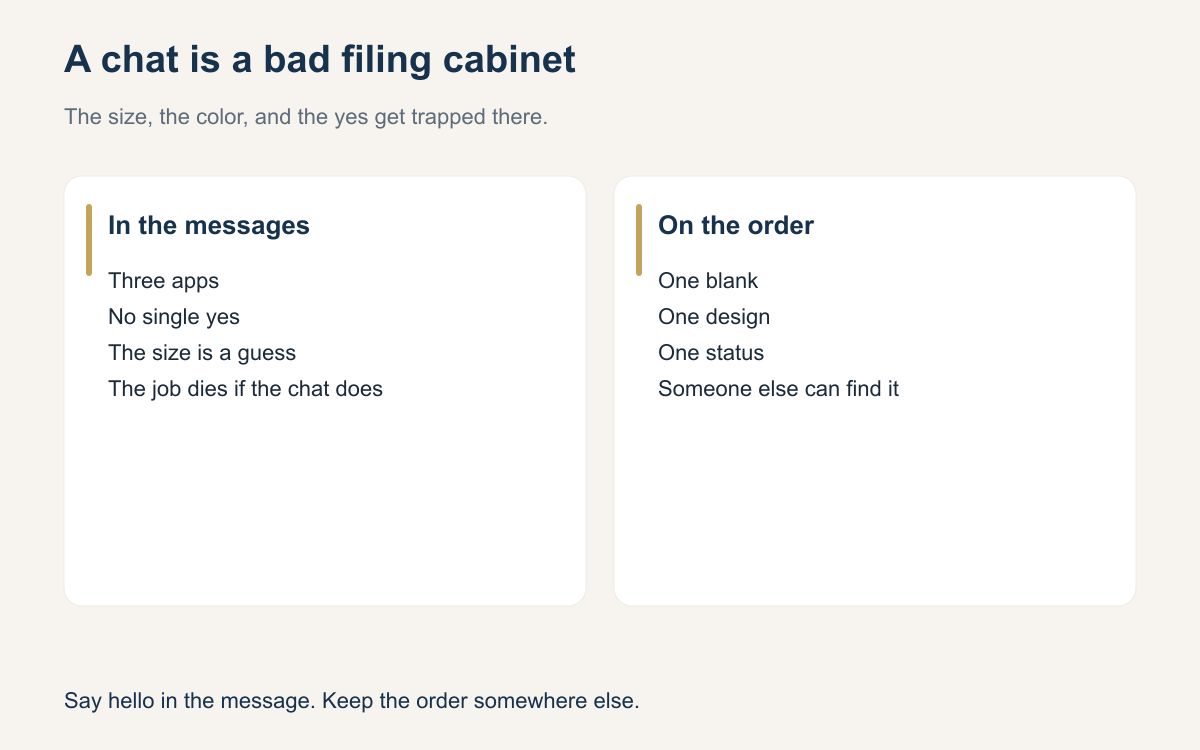
You open Instagram to answer one question and lose forty minutes. The buyer asked about a black cap three days ago. The size was in a voice note you cannot play at the machine. Facebook has a different color. Email has the logo, attached to a message that also says never mind in the second paragraph. None of those apps talk to each other. You are the only index, and the index goes home at night.
The size, the color, and the yes are trapped in the chat. When they stay there, the job is one phone battery away from vanishing. Write them onto an order before you close the app. The conversation can end. The hat still has to be sewn, and the next person in the shop cannot scroll your personal messages to find a thumbs-up.
Where the hours actually go
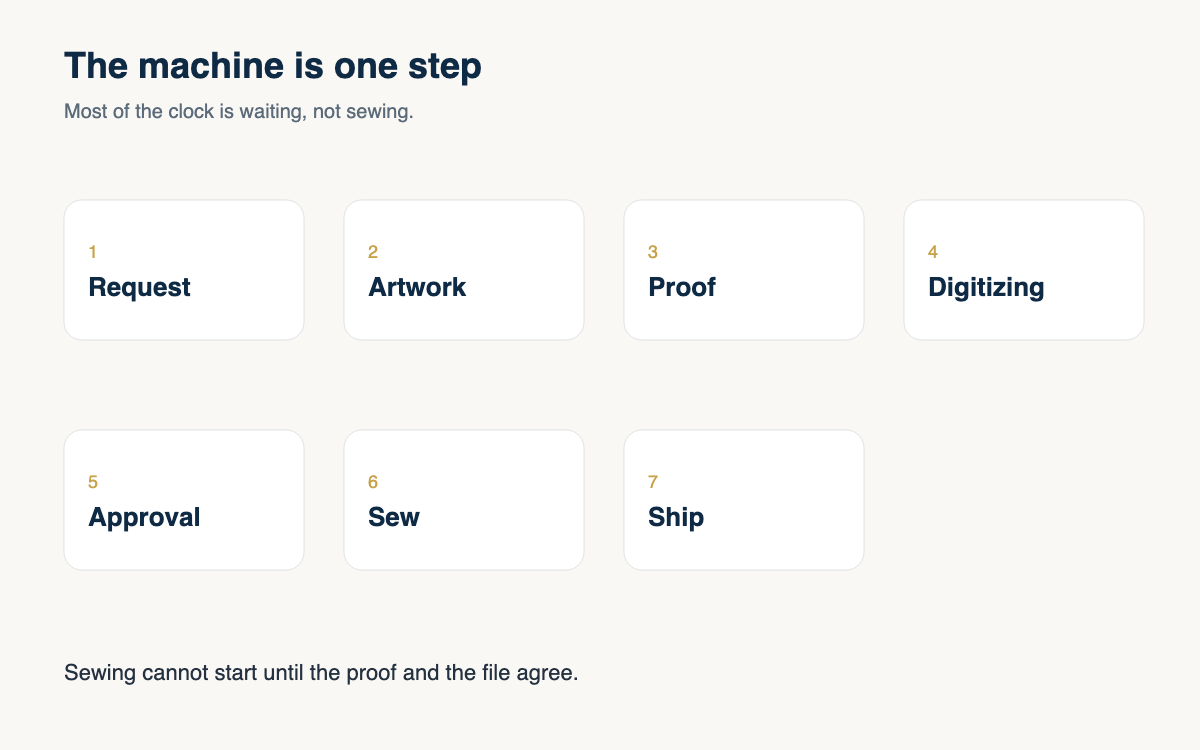
The time is not the typing. It is the search. You scroll to the message that said large, then realize that was a different person, and the wearer is a medium. You check Facebook because the art arrived there on another day. You open email and download three versions of the same logo. By the time you have the facts, you could have hooped a cap. That search is the tax on running orders inside direct messages.
Add the switching cost. The shop phone, your personal phone, and a laptop inbox are three places a yes can hide. A helper at the machine does not have the password. You become the bottleneck for every question about what they picked. A slow notebook at the front counter beats a thread only you can see, because the notebook stays in the building when you leave for lunch.
The size, the color, and the yes
Size is a count by garment, not a mood. A few hoodies is not a size run. Write each size with a number beside it, the day you hear it. If the buyer changes a count, strike the old line on the order. Do not leave both versions in two apps and hope you remember which message was last. The machine sews the written count. It cannot sew the one you meant to reread.
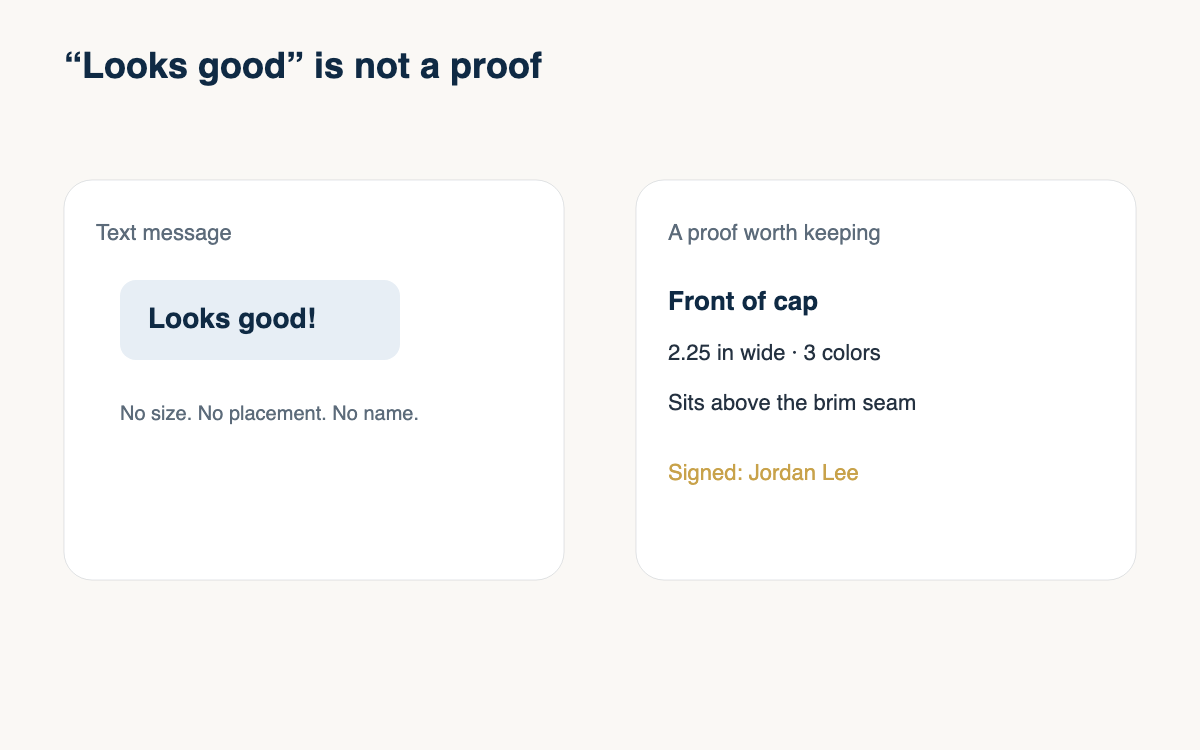
Color needs a name you can reorder. Black, charcoal, and dark heather are different blanks, and a photo taken at night will lie. Ask which color, repeat the word back, and put that word on the order. The yes needs a sentence you can find later: approved front logo, about two inches, on the navy cap. A heart reaction is not a size, a color, or an approval you can hand to another person.
Instagram, Facebook, and email
Instagram is where a lot of shops say hello, and it is a bad filing cabinet. Messages sink. A story reply can hide the art by the next day. Download the file the same day and put it with the order. If you leave the only copy in the app, you are renting the production record from a company that does not sew, and the rent can run out while you are in the hoop.
Facebook has the same trap on another login, often a personal profile the rest of the shop cannot open. Email feels safer because it sits in a folder, until the logo is on the third reply and the approval is on the fifth, and someone forwards only the first. Treat email as the place a request arrives. Then move the facts to one order. Three inboxes are three chances to sew the wrong color.
What the order has to hold
An order that can replace the chat holds the design, the blank, and the status. Design means the file you will actually use, not a link that expires. Blank means style, color, and the size run. Status means where the job is: waiting on sizes, proof sent, approved, sewing, or ready. If any of those still live only in a message, the chat is the real system and the order is a rumor.
Write the next action as a verb. Call for the missing count. Send the preview. Sew the fronts. A helper should not have to ask what pending means. When the buyer writes again, answer from the order, not from a search. The message gets shorter because the size and the color are no longer up for debate inside a thread nobody else can see.
Copy this out before you close the app
Do the copy the same day, while the thread is open. Waiting until Monday means you will reread every message and still miss the color. If the buyer has not given a fact, write missing beside it so the gap is visible. A blank line is a question you can ask. A blank memory is a guess you will sew. The two do not feel different at the machine until the buyer opens the bag.
Then you can leave the chat. Send one summary if you want the buyer to see the same facts you saved. After that, a change has to update the order, not only the thread. Shops that do this stop losing Friday to archaeology. The hello can stay in the direct message. The size, the color, and the yes cannot.
- Write the blank style and the color in words you can reorder.
- Write the size run with a count, and cross out old counts.
- Save the art file on the order, not only inside the app.
- Record the placement and the sew size in inches.
- Paste the approval as a sentence another person can find.
- Set a status and the next action before you close the app.
- Send one summary so the buyer and the shop share the same facts.
Direct messages are a fine place to say hello and a poor place to store the job. Move the size, the color, and the yes onto an order the day you hear them. The conversation can end. Someone else can still sew the right garment while your phone is in another room.
A direct message is a fine place to say hello. It is a poor place to be the only copy of the size, the color, and the approval. An order that holds the design, the blank, and the status means the conversation can end without the job disappearing. Stitchify Hub is one system that keeps that record. Writing the order down matters more than which notebook holds it.
A question for the group
Where did a size, a color, or a yes get lost in a direct message last month, and where will you write it down next time?