
The business
How to quote a new logo without giving the file away
A new logo is a file you have to create, a sew you have to run, and a blank you have to buy. Those are three prices, and the customer should know which parts they are buying.
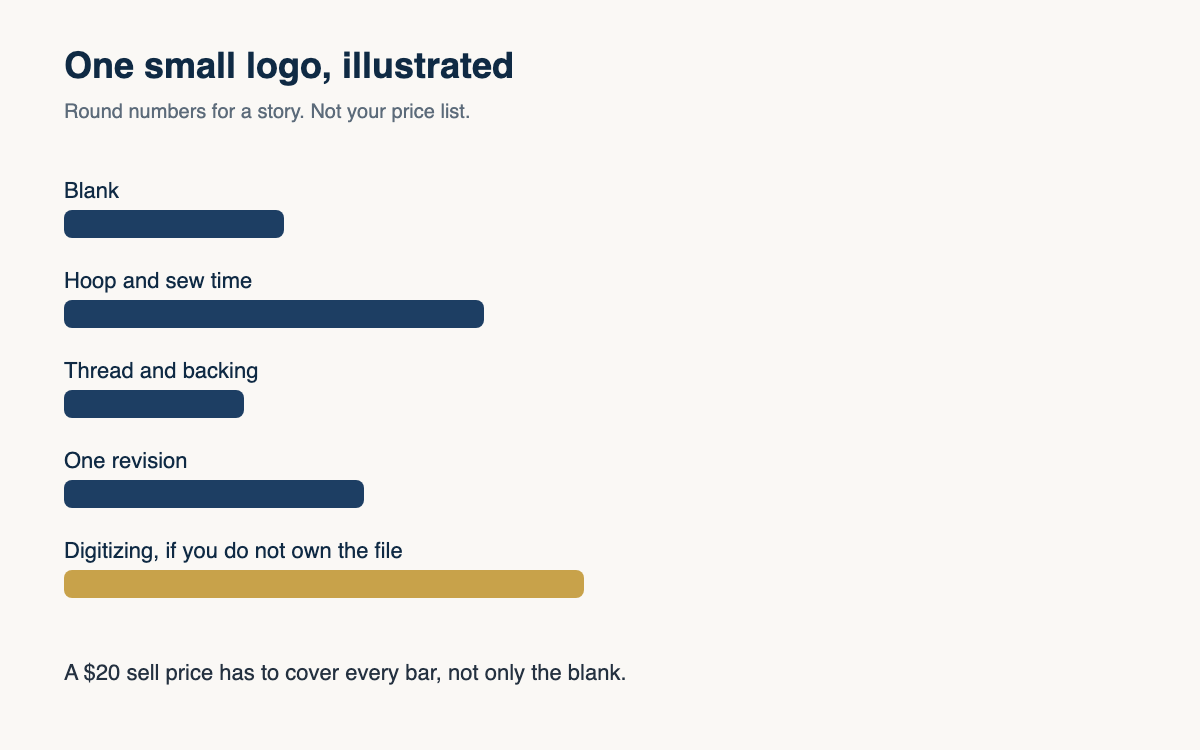
The dangerous quote is a single number for “a logo on a hat.” Inside that number you are hiding digitizing, a sew-out you may have to redo, thread, and the blank. If the customer reorders, you will not know whether they already paid for the file. If they take the art to another shop, you may have handed over a sew file you never meant to sell. A clear quote separates those pieces before anyone is annoyed.
You can be generous on a reorder and firm on a new file. Those are different jobs. The new one includes thinking: size, colors, underlay, a sample. The reorder is hooping a file you already trust. Price them differently, say so in writing, and you will argue less about both.
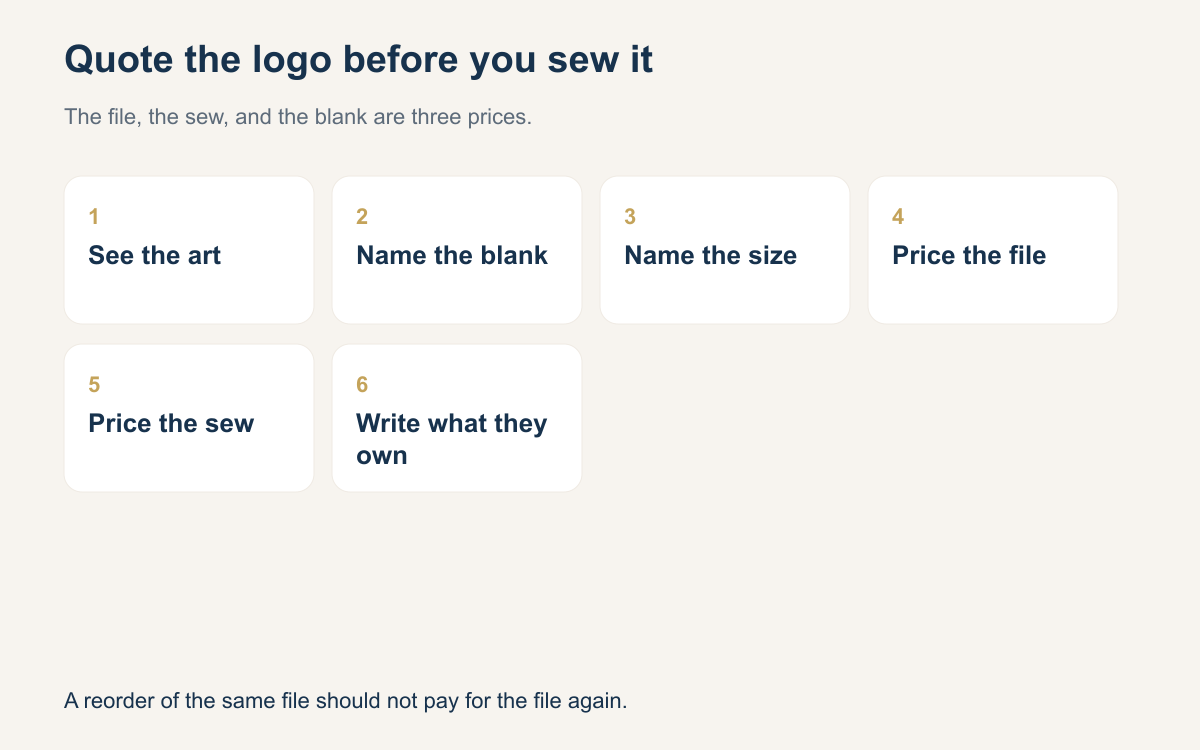
See the art and name the blank first
Do not price from a description. Ask for the artwork, the blank, the color, the placement, and the quantity. A “simple logo” in an email is often a detailed crest once the file arrives. Quantity changes the sew price and it does not remove the file cost on the first run. If they have not chosen a hat, quote the file as its own line and mark the sew price as depending on the blank. That is more honest than a package number you will have to walk back.
Look at the art at the size they want before you promise a date. If it needs to be simplified, the quote includes that conversation and the sew version, or you send it back for art you can actually sew. Digitizing a file you already know will fail is how you end up doing it twice for one fee. Say what you will change. “We will drop the tagline and sew three colors at two inches” is a scope. “We’ll make it work” is not.
The file, the sew, and the blank are separate lines
Put a digitizing or art fee on the quote when the sew file does not exist yet. Put the blank and the sewing on their own lines, including setup if a single piece would not otherwise pay for the hoop. The customer can see why twelve hats are not twelve times one hat, and why one hat with a new logo costs more than they guessed. Hiding the file fee inside a high piece price punishes the reorder, or it makes the first piece look like a rip-off with no explanation.
Decide what they are buying. Many shops keep the sew file and charge digitizing once, then sew reorders without that fee. Some sell a copy of the file for a higher fee because the customer wants to leave. Both can be fair if you say which one this quote is. What is not fair, to you, is emailing a DST to anyone who paid for a single hat and then watching that file walk. Write the line: “Digitizing fee covers sewing at this shop. The sew file stays here unless a file-release fee is paid.”
A reorder should be obviously cheaper
When the same logo comes back for the same type of blank, the digitizing line should be zero or it should say “already on file.” If you charge it again by habit, you train customers to shop the reorder. If you waive it without noting why, your books look like you got slower. A one-line note on the quote does the work: “No digitizing. File from March, left chest, navy polo.”
A new placement can be a new file even when the logo is old. A cap version is not a chest version. Charge for the new sew version, and explain that the art is being rebuilt for a different hoop, not that you forgot you already digitized something. Customers accept a smaller fee for an adaptation more easily than a full digitizing fee with no story. Keep the old file. You may need the chest version again next season.
Write what happens if they change it
A quote should say how many art changes are included. One or two rounds after the first sew version is a common shop limit. A new idea, a different icon, or a rewrite of the name is a new file, not a tweak. If you do not say that, the quote is open-ended and the fee you set is a fiction. Put the limit in the same place as the price, not in a terms page nobody opened.
Also say what you need in order to start. Artwork in a form you can edit, approval of the sew version, and payment of the file fee before you digitize are reasonable. Starting the file on a promise is how you own a DST for a customer who vanished. You can be flexible for a school you already trust. The written quote is the default for everyone else. Flexibility is a choice you make on purpose, not an accident of being busy.
- Get the art, the blank, the size, and the quantity before you price.
- Show a digitizing line separately from blanks and sewing.
- Say whether the sew file stays with you or is being sold.
- Waive the file fee on a true reorder, and say that you waived it.
- Charge again when the placement needs a new sew version.
- Cap the revisions in the quote, and do not start the file on a maybe.
A new logo is intellectual work plus machine time. Quoting it as one round number feels simple and costs you the explanation you will need later. Three lines are still simple. They just tell the truth about what is being bought.
The next new logo that hits your inbox, answer with those lines before you open the digitizing software. If they only wanted a price for “a hat,” the quote will teach them what the hat contains.
A question for the group
Do you keep sew files unless the customer buys them, or do you send the file with the first order, and what made you choose?