
Placement
Measure the sew area before you quote the design
The price and the file both depend on the inches you can actually hoop. A guess from a product photo is how the logo ends up on a seam or too small to read.
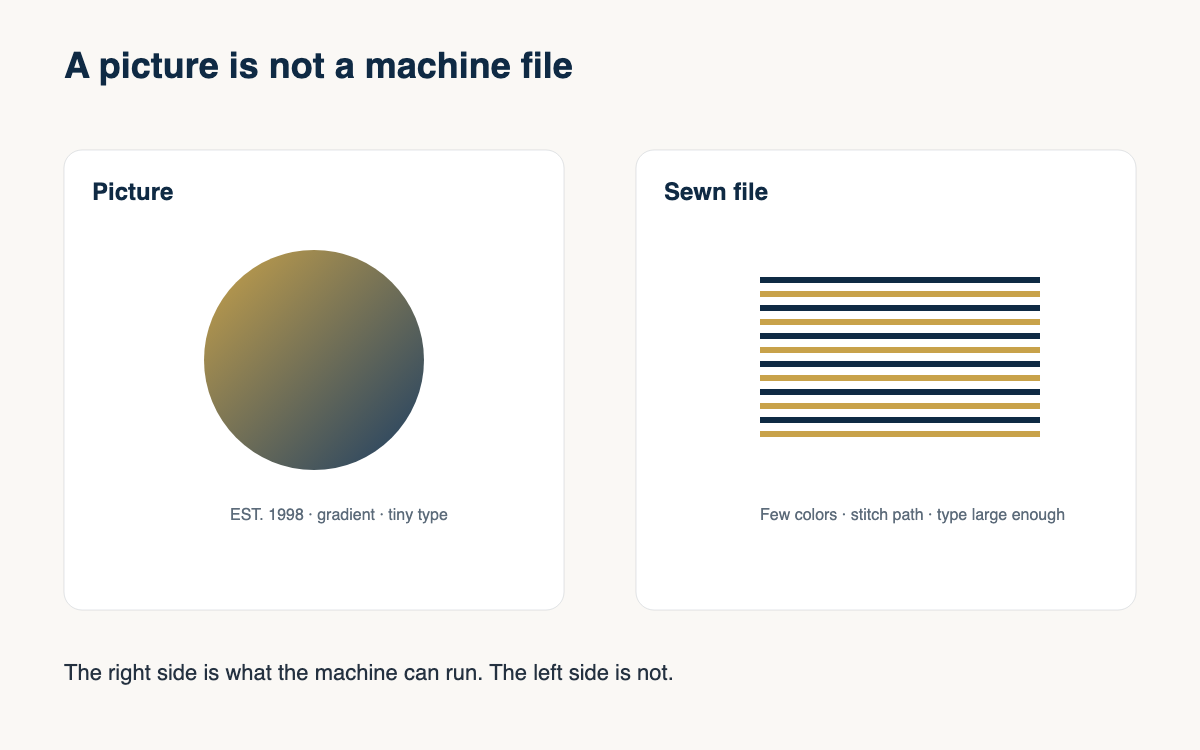
A customer says “about this big” and holds their fingers up on a video call. You quote from that gesture. The cap arrives, the front panel is shorter than their fingers, and the design you already promised does not fit. The argument is not about taste. It is about inches nobody wrote down.
The sew area is the part of the blank you can hoop without crossing a seam, a zipper, a pocket, or a mesh panel that will not hold the stitch. It is smaller than the product. It is smaller than the photograph. Until you know it, the design and the price are both guesses.
Measure the product you will hoop
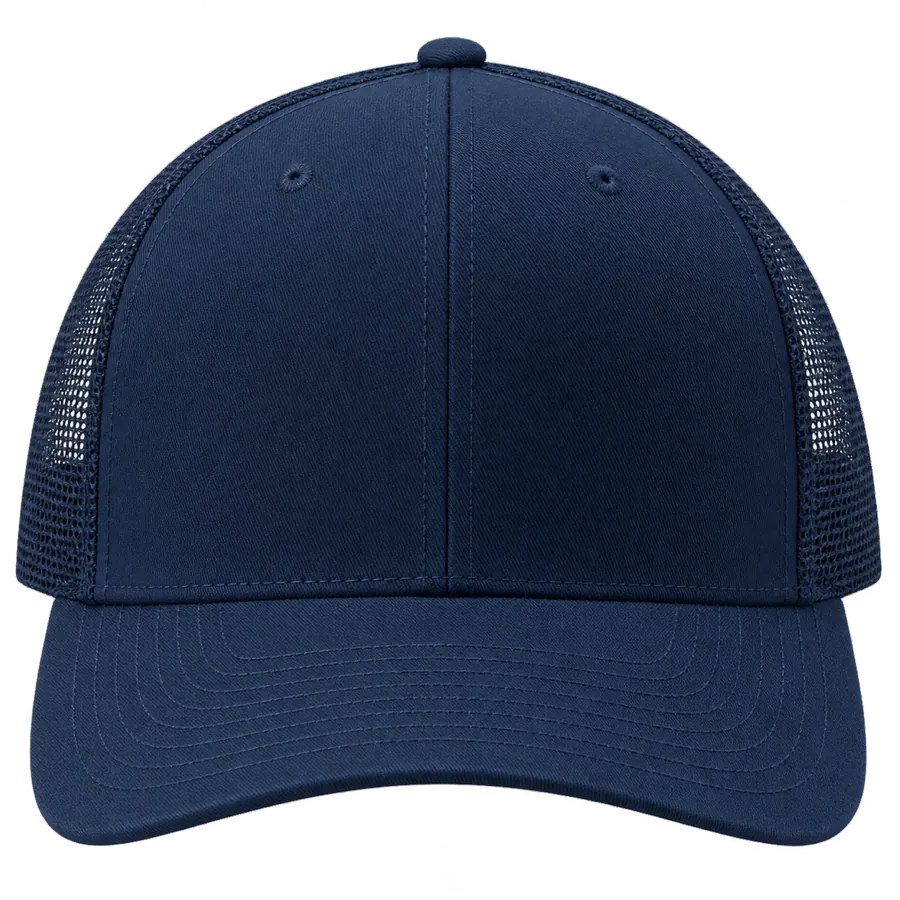
On a cap, measure the front panel from seam to seam and from the top button area down to where the brim starts to curve away. That rectangle, not the width of the hat in a catalog photo, is the field. Leave a margin so the design does not sit on the seam. A design that needs the entire panel, edge to edge, will wander the first time the hoop shifts.
On a shirt, decide the placement first. Left chest is not “the front.” A common left-chest mark is a few inches wide, high enough to clear a pocket and low enough to miss the collar. A full front stops before the hem and before any pocket that would hide it. A sleeve design has to live between the shoulder seam and the cuff, on a curve. Write the placement and the width in the quote. “Logo on the shirt” is not a size.
Thread needs more room than the drawing
A line that looks elegant at full zoom is a few stitches wide at sew size. Small type under a logo is the first thing to fail. If the customer needs a phone number, a street, and a tagline, those words need inches, not a corner of the artboard. When the words do not fit the sew area at a readable stitch size, they do not belong on that blank. Offer them on a hang tag, a back print, or not at all.
Say the size out loud in the proof. “Two and a quarter inches tall on the cap front” is a fact the customer can accept or reject. “Nice and visible” is a feeling you will not agree on later. If you change the size after approval, the old yes is finished. People accept a smaller, cleaner mark when they see the limit before they fall in love with the poster version.
The size changes the price
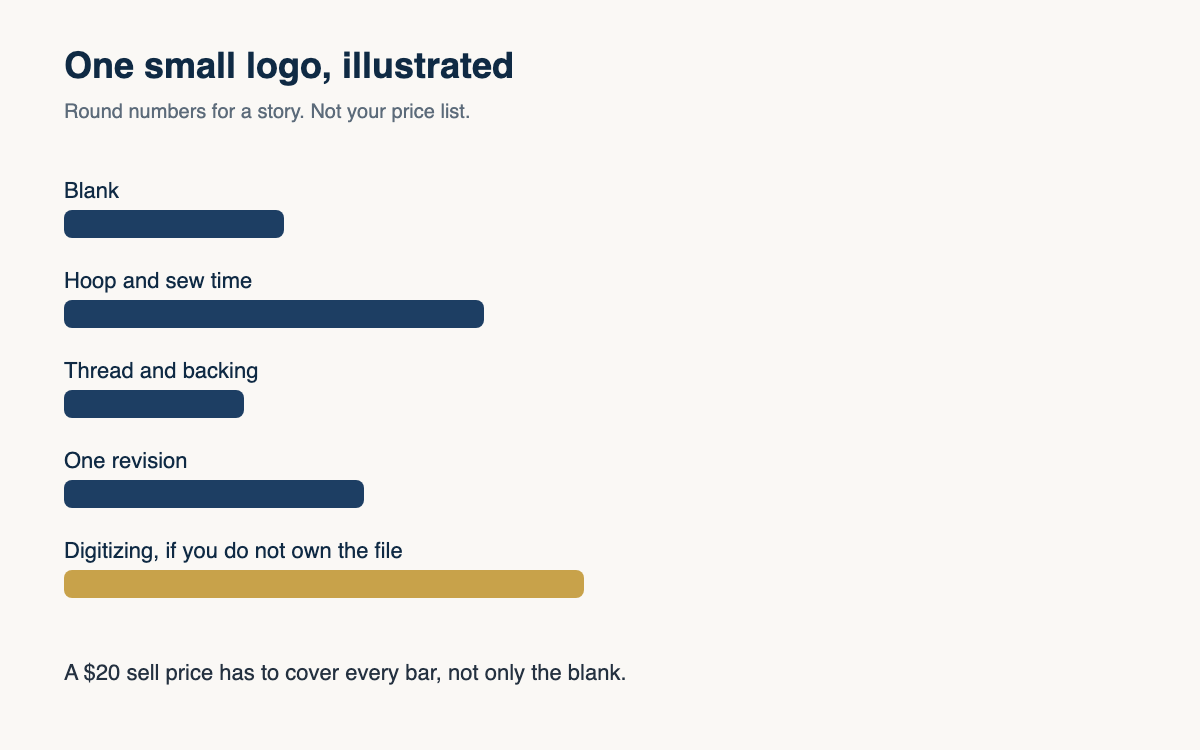
A wider design is more stitches, more time, and sometimes a different hoop. A design you have to redraw so it fits is a file charge, not a favor you hide inside a twenty-dollar sew. Quote the size you measured. If they want it bigger and the blank can hold it, that is a new price. If they want it bigger and the blank cannot hold it, that is a different product, not a discount.
Keep a note for the blanks you sew every week. Cap style, front height you will not cross, chest width you actually hoop, tote panel inside the seams. You should not remeasure a Richardson front from scratch on every order, and you should not trust a memory of “about four inches” from a different brand. The blank in the box is the one that counts.
- Measure the clear area between seams, pockets, and hardware.
- State the placement and the width in inches on the quote and the proof.
- Drop words that cannot be read at that size.
- Change the price when the size or the redraw changes the job.
A shop that measures first stops designing in the abstract. The art has a boundary, the customer has a number, and the hoop has a job it can finish. The next quote you send can carry one extra line: the blank, the placement, and the inches. That line prevents more redos than any speech about quality. If the design does not fit those inches, you do not have the right design yet. You have a picture that still needs to be cut down to the product.
Do it on the next order before you answer the price. Blank on the table, tape on the sew area, width written in the reply. If you already quoted from a photo, correct the size in the proof and let them choose the smaller mark or a different product. Guessing in public is how a friendly customer becomes a dispute about a logo that was never going to fit.
A question for the group
What width do you actually sew on your most common cap and your most common left chest, and where do you write it so the next quote uses the same number?