
The industry
Is custom embroidery too saturated?
A crowded internet of logo hats is not the same as a crowded town, trade, or deadline. A small shop looks for a pocket it can name: a place, a kind of work, a blank, or a turnaround other shops miss. The whole industry is the wrong argument.
Someone will tell you custom embroidery is saturated. They mean they see hats for sale in every feed, at prices that look like a race to the bottom. That view is real and it is wide. It describes strangers selling a generic cap to anyone with a logo file. It does not describe the clinic two miles away that still cannot get twelve polos with a readable name by Thursday.
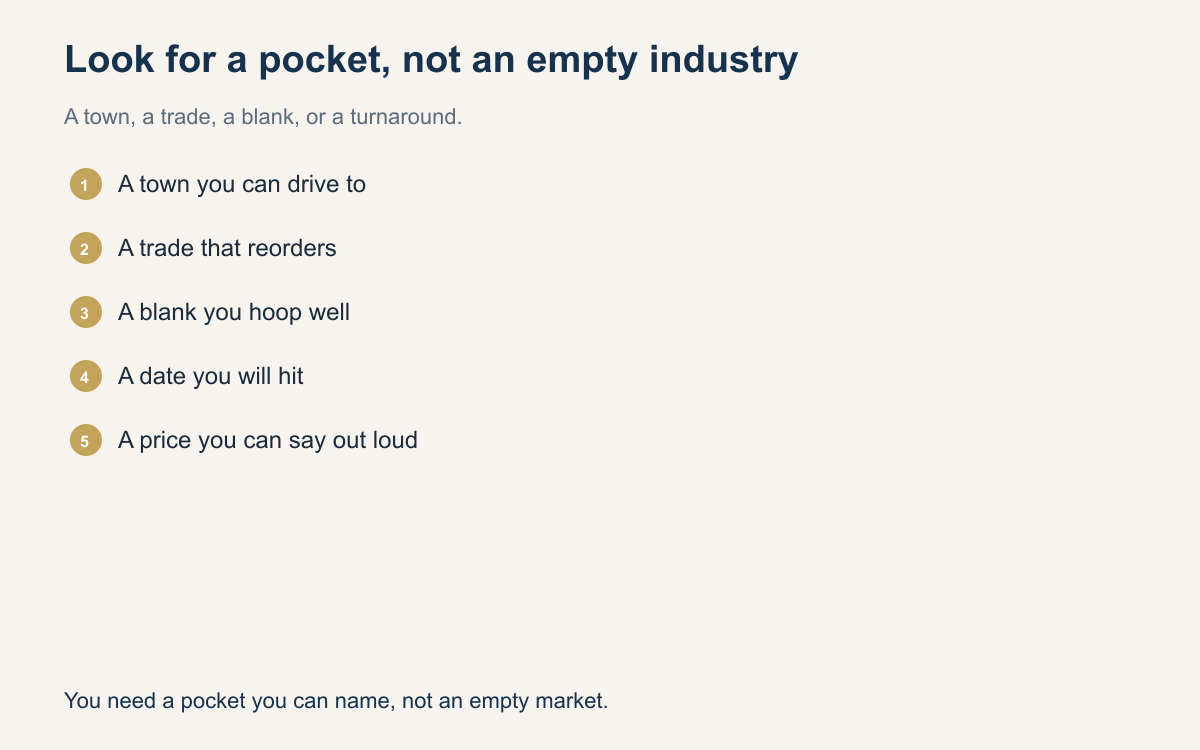
You do not have to win the wide market. You have to find a pocket where the machine, your judgment, and your calendar fit a buyer who is poorly served. A pocket is specific enough to name. A town. A trade. A blank other shops avoid. A turnaround you will actually hit. If you cannot name it, you are still arguing about the whole industry, and the industry will not cover the rent.
A wide market is a bad map
Saturation is what scrolling feels like. Another hat. Another discount. Another promise of any art on any day. Competing there on price is a hard life, because someone with lower overhead will type a smaller number. You can visit that market. You do not have to live in it. The buyers in a feed are often shopping for the cheapest logo on a blank they have never held.
A small shop has a different asset. You can see the garment, fix the file, and hand the bag to a person who will reorder when a new employee starts. That asset is wasted if every quote is a bid against a website. Ask whether this buyer needs a shop or a transaction. If they need a shop, the crowded feed is not the rival. The shop that ignores them is.
Start with a town you can drive
A town pocket is the people who will not mail a hat to a stranger for a tournament, a crew, or a fundraiser. Schools, a city crew, a hospital unit, a church league. You can list ten of them on one page. You know which blanks they already wear and which month they reorder. A saturated ad in another state does not sew their caps. A clear price and a date from you can.
Drive the list before you call it a niche. Who orders every fall. Who got a late box last year. Who still wears a faded mark because nobody local offered a cleaner path. Those names are the pocket. My area is too vague to schedule. The fall leagues and the clinic on the main road are a plan you can work on Monday without arguing about the industry.
Then a trade that reorders
A trade pocket is work that reorders the same kind of mark. Crews who need a name that survives a job site. Kitchens that wear through coats. Clinics that add a person every month. Salons, vet desks, property teams. The logo is often simple, the sizes change, and the buyer is tired of explaining the job to a shop that treats every order like a one-time hat for a stranger.
Learn the annoying part and put it in the offer. A color you can get again. A name under the logo. A jacket you can actually hoop. A standing size list so a new hire does not restart the quote from zero. You are not claiming an entire industry. You are claiming the accounts you can reach who want the same thing done right the next time. That is smaller than a saturated market and more useful than one lucky order.
A blank or a deadline others dodge
A blank pocket is a garment you hoop well and other shops push aside. A heavy work jacket. A bag with a difficult zipper. A cap style you have practiced until the front stops buckling. If people hear no twice and then hear yes from you, you are not standing in a saturated lane. You are standing in the gap they made by refusing. Price the difficulty. Do not hide it so you can look as cheap as a small left chest.
A turnaround pocket is a deadline you publish and hit. Art approved by Tuesday for a Saturday event, and a no when the art is late. Teams pay for a date they can trust. Plenty of shops say rush and then go quiet. Your edge is the cutoff, written where the buyer can see it, and the refusal that protects the date. A turnaround you miss becomes the story that empties the pocket you just claimed.
Test the pocket before you bet the year
Test with names, not with a feeling. Write ten buyers who fit. Write the blank, the usual quantity, and the price you would say out loud. Write why they are underserved: distance, a garment, a date, or art nobody wants to redraw. If you cannot fill the page, you do not have a pocket yet. You have a hope. Talk to five of them before you print a word about a specialty.
Then run a small proof for one season or ten accounts. Practice one hard blank until the sew-out is boring in a good way. Keep the ordinary hat work that pays the week. Judge the pocket by reorders and by jobs you were right to refuse, not by whether a stranger online says the trade is full. The wide market can be crowded and your Tuesday can still have room.
- Name at least ten buyers in a town you can actually drive to.
- Name a trade that reorders the same kind of mark, and the hard part of that job.
- Name a blank you hoop well that nearby shops often refuse.
- Write a turnaround cutoff you will hit, and the jobs you will turn down.
- Say the price out loud before you tell a story about being the careful shop.
- Talk to five buyers in that pocket before you call it a specialty.
- Keep score with reorders, not with how crowded a feed looks this week.
Custom embroidery can look saturated from a distance and still have room up close. Look for a town, a trade, a blank, or a turnaround where buyers are waiting on a shop that tells the truth and hits the date. You do not need the whole industry to be empty. You need a pocket you can name, sew, and stand behind when the bag is picked up.
A question for the group
Do you think the embroidery industry is too competitive, or is there still room for a small shop?