
Tools
From manual quotes to a buyer who can see the design
Custom embroidery often starts with a manual quote and a wait for a screenshot. A buyer can now expect to see the design on the blank and a price before anyone sews. The person who digitizes still decides the sew. The wait for a picture does not have to.
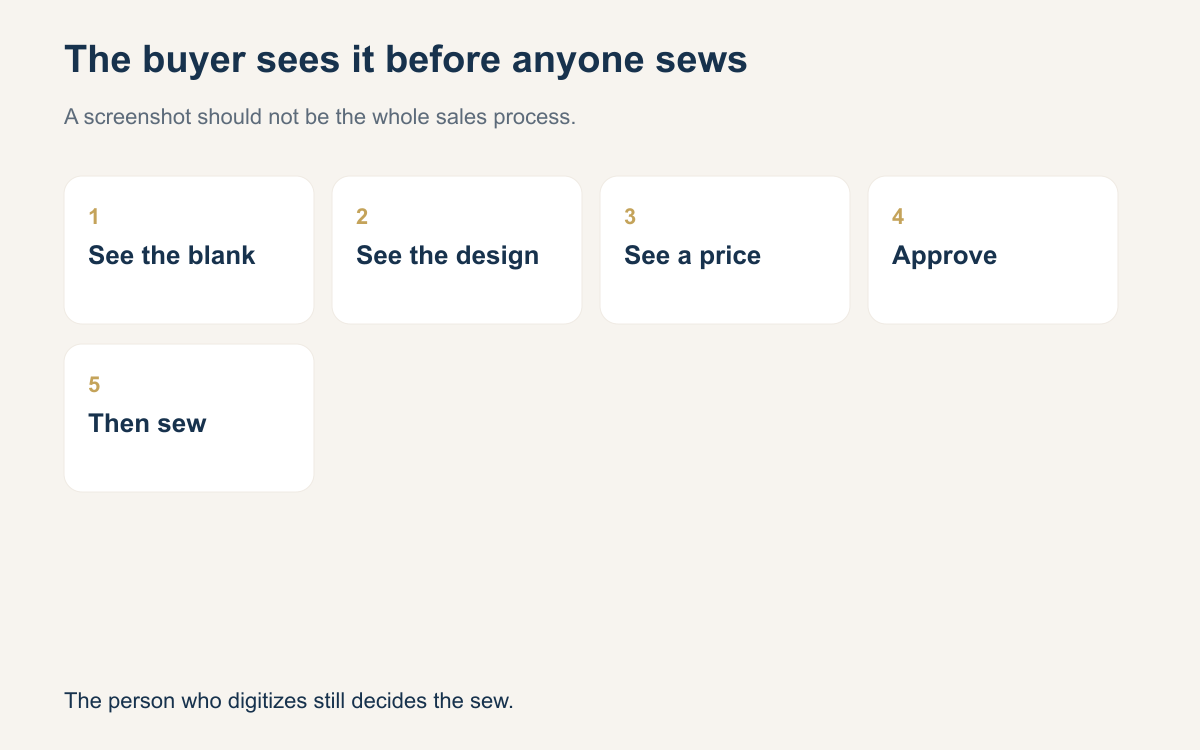
For a long time the front door of a custom shop was a message. Send the logo. Wait. Get a price in a sentence, or a photo with the art dropped on a hat that might not be the hat. Wait again. Approve. Then someone could digitize and sew. The sewing was real. The waiting was a habit, and buyers are running out of patience for a habit that only saves the shop from writing things down.
The shift is easy to describe. A buyer who can see the design and a price can decide. A buyer who must wait for you to make a picture is still inside a quote, even if you already call it an order. You do not give up the sew. You give up being the only person who can show what the hat might look like.
The manual quote was the whole store
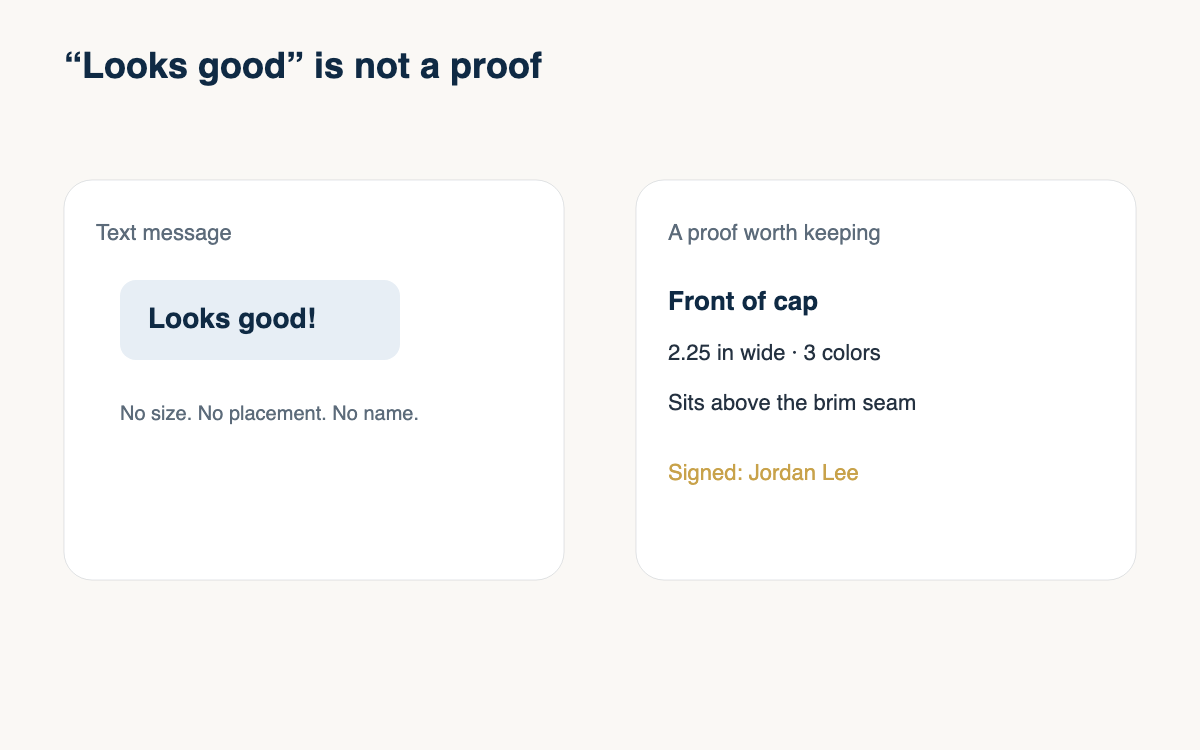
A manual quote hides the job in your head. You know a cap front is more work than a left chest. You know this logo is too thin. The buyer knows none of that until you write back. If you are sewing, the quote waits until night. Every extra day is a chance they pay someone who answered with a picture. The skill was never the problem. The delay before the picture was.
The screenshot round has the same shape. You export, they reply, you export again. The yes is a sentence in a thread. Nothing about that teaches the edges of what you will sew. They learn by hitting a no, late. Show the limits with the first picture and the talk moves to real choices, not to five versions of a logo that was never going to fit the panel.
What the buyer needs to see
The buyer needs the design on the blank, at a size you can sew, in colors you can match. They need a price that belongs to that picture, including the garment when you sell the garment. They need to know the image is a preview, not a photograph of stitches. With those three, a person can say yes or change the art without waiting overnight for you to leave the machine.
They do not need to set density, pick backing, or approve underlay. Those stay with you. If the screen lets them order anything the machine cannot sew, you built a faster path to a bad promise. The picture should already sit inside rules you trust: the area, the type size, the thread colors, and the blanks you stock. Seeing the design is clarity. It is not permission to ignore the hoop.
A price next to the picture
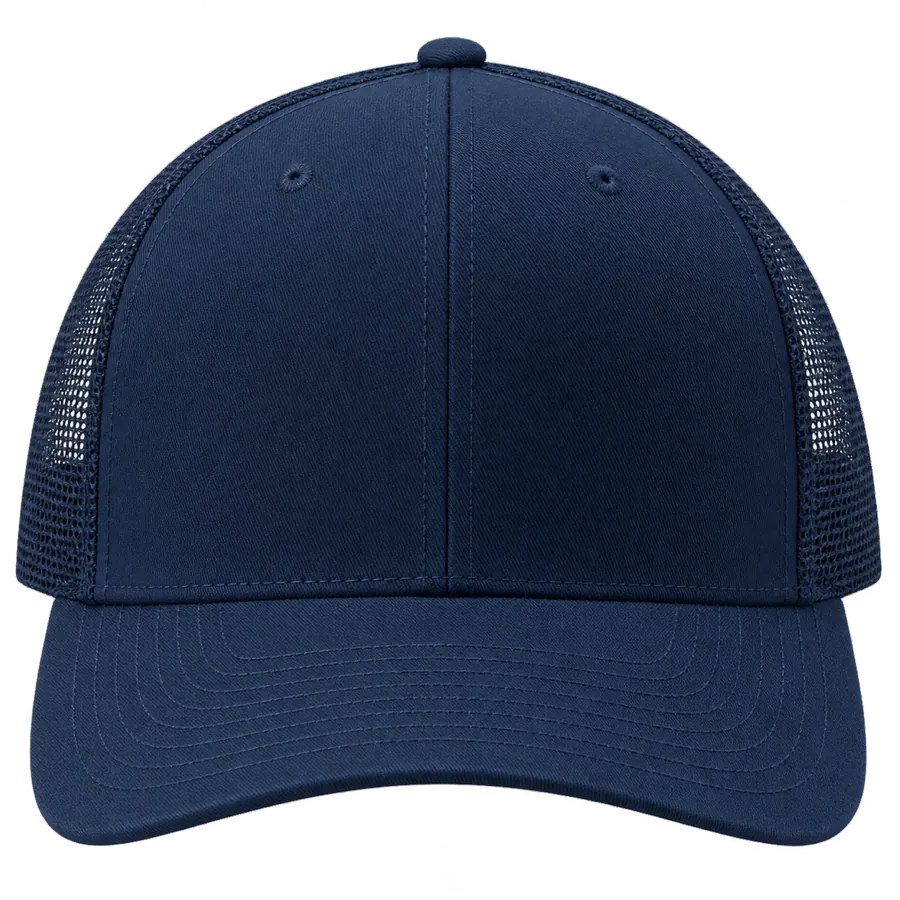
Price is part of seeing the design. A clear preview with a promise to quote later still parks the buyer in a waiting room. Common placements can carry a number you already believe: the cap front, the left chest, the quantity break. Odd art can pause for a person. Label that pause as a review. Do not make every polo wait in the same line as a photograph of a dog.
When the price and the picture travel together, the argument gets shorter. The buyer is not matching a number in a text to a memory of some other hat. You are not rebuilding the quote from a chat log. The approved pair is what production inherits. If the art changes, the price can change in the open, before anyone commits thread or cuts a stack of blanks.
The digitizer still decides the sew
Nothing about a faster picture sews the hat. The person who digitizes still decides underlay, density, sequence, and whether the mark should be sewn at all. A clean preview can hide a photo, a gradient, or type that will not survive. You open the file and do that job. If you must redraw, you say what changed. The buyer waited less for a picture. They still depend on your judgment, and that dependence is the craft.
Production should receive the proof with the machine file and the blank. The operator should not hunt the yes in a mailbox. The date it should leave should sit on the same record. The front of the shop got faster for the buyer. The back of the shop got a clearer handoff. If you only speed up the pictures and lose the file, you traded one mess for another.
What can change on an ordinary Monday
You do not rebuild the shop in a day. Pick the blanks you sell most. Set the areas and the prices. Put a true preview in front of the buyer for those jobs, and keep a manual quote for the strange ones. Say the preview is not the sew-out. Then digitize as you do now, with a person editing the stitch file until it matches what the picture showed.
Watch which messages stop. If you still hear a little bigger all week, the preview is not showing size. If you still hear which hat, the blanks are unclear. Fix the picture before you add more words. The change in shopping is not a slogan. It is a buyer who can see the design and the price, and a shop that still decides the sew.
- Show the design on the exact blank, inside the area you will sew.
- Show a price beside the picture for the placements you sew all the time.
- Label the image as a preview, not as a photo of finished stitches.
- Keep type size, colors, and blanks inside rules you already trust.
- Leave odd art for a person to price before anyone calls it final.
- Hand production the proof, the machine file, and the blank together.
- Have a person edit the stitch file and decide whether it should be sewn.
The buying path is moving from a manual quote and a screenshot wait toward a buyer who can see the design and a price. Meet that on the jobs you repeat. Keep the person who digitizes in charge of the sew. The buyer stops waiting on a picture you could have shown. You stop retyping a number you already knew.
For an embroidery shop, that means the buyer sees the design on the blank and a price before anyone sews. Stitchify Hub does that on the storefront the shop runs, and production keeps the proof through the machine file. The person who digitizes is still the person who decides the sew. The buyer just stops waiting on a screenshot.
A question for the group
What does a buyer still have to wait on you to see, and what could the buyer see before you sew?