
Growing the shop
How to get your first 10 embroidery customers
The first 10 embroidery customers can come without ads: a local team, a school contact, a realtor, a coffee shop, a sample you can hand someone, a referral ask, and a photo of a finished sew-out. Quote while you are standing there, and price the work so the small orders still pay.
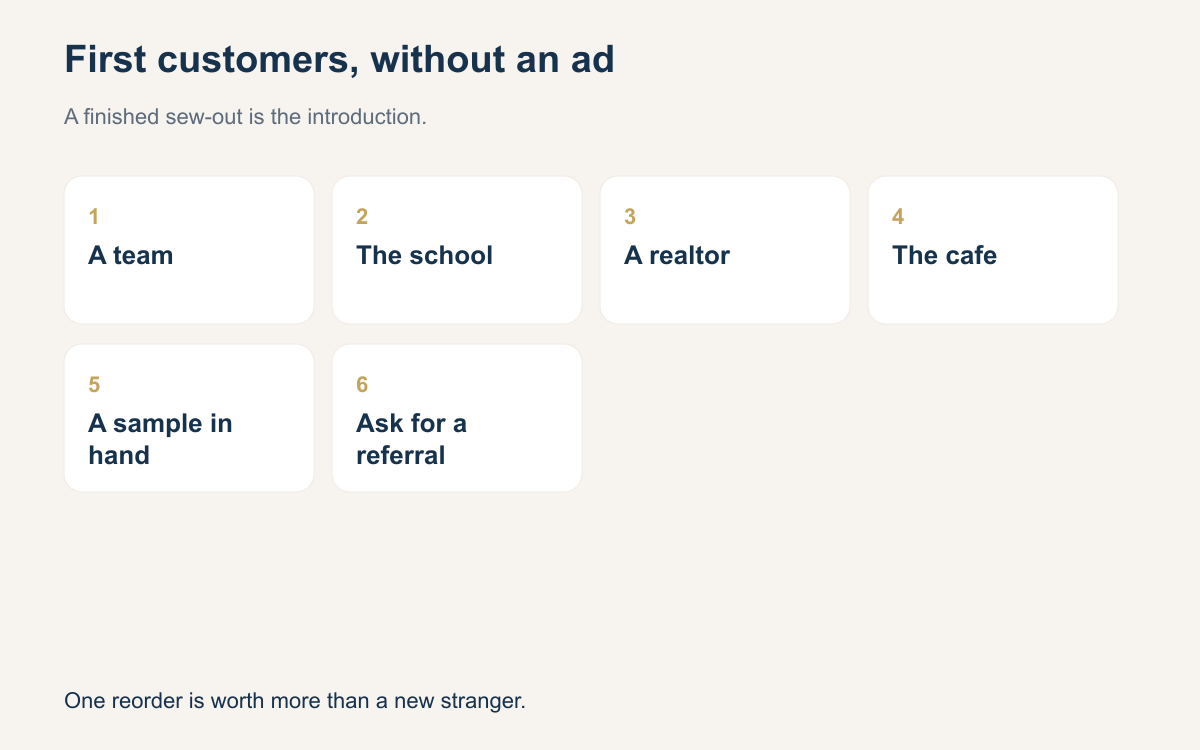
You need 10 real orders, not 10 followers. The people who already buy hats and shirts live near you: a team, a school group, a realtor, a coffee shop. They will not find you because you are ready. They will find you because you showed up with a sew-out they can hold and a price you can say without looking at your shoes. Ads can wait until you know that sentence.
None of this is unpaid work dressed up as marketing. You make a few samples you paid for, you carry them, and you sell the next pieces at a price that covers the blank and the hour. A six-hat order counts as a customer if it is paid. A promise to "work something out" does not. The route below is practical. Walk it, or steal the parts that fit your town and skip the ones that do not.
Start with samples you can hand over
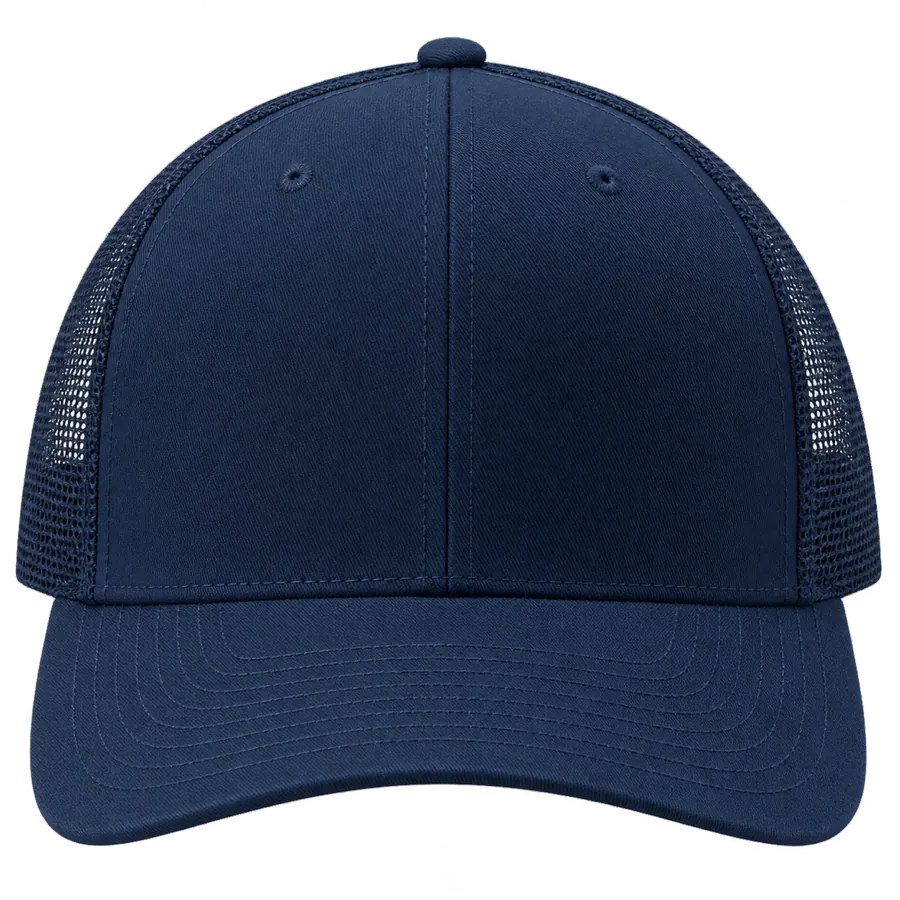
Make three samples before you ask anyone for an order. A cap with a clean two-color mark. A polo with a left chest. One more piece in a style you can actually repeat, such as a simple name if you sew names. You paid for these. They stay yours, or you sell them at full price. Do not hand them over as unpaid product to ten businesses and call that a launch. The point of the sample is that the conversation is about thread a person can touch, not about a mockup on your phone.
Finish them to the standard you want the town to copy. Trim the back. Bag them if you bag customer work. If the cap sew is the one you are proud of, lead with the cap. If the chest logo is cleaner, lead with the polo. You are not building a catalog. You are building proof that you can finish. One weak sample will do more harm than no visit. If a sample is not good enough to hand a coach, sew it again before you book the walk.
The team, the school, the realtor, the shop
Local teams are the first door. A rec team, a youth club, a workplace softball team. Talk to one coach or one organizer, not a group chat. Show the sample. Give a price for 12 and a price for 20 that follows your real schedule, including a floor so you do not discount the blank away. Ask when they order for the season. One team can be customer number 1 and also hats 1 through 15. You do not need ten teams to get ten customers, but you do need the first coach to hear a number, not a range.
The school door is a booster club, a theater teacher, or a front office that already buys spirit wear. Ask whether one group, not the whole school, could be sewn locally. Realtors buy closing gifts and office polos. Walk in with one cap and a written price for 6 and for 12, and leave the price. The coffee shop is often six staff hats. Offer the six-piece price from your sheet. Those counters reorder when staff changes, and a paid reorder is a customer.
Ask for the next name
After you deliver, ask for a referral in one sentence and then stop. "Who else do you know who orders shirts or hats for a group?" Write the name down. Contact that person this week, while the first delivery is still a story they might mention. A coach who introduces you to another coach is how you move from customer 2 to customer 5 without buying attention. If you skip the ask, you are hoping the town gossips on your behalf. Some towns do. Do not plan on it.
Post a finished sew-out where local people already look. A photo of the real hat, on a head or on your counter. Name the kind of piece if you want. Do not post a mockup and call it a job. People trust thread they can see. One post will not build a shop. One post a week of real work, plus the visits, puts you in front of the right handful of buyers. If you have nothing finished, you are not behind on posting. You are behind on sewing the sample. Finish first.
- Three samples you paid for: a cap, a chest logo, and one style you can repeat.
- One coach, with a 12 piece price, a 20 piece price, and a floor.
- One school group, one realtor office, and one coffee counter.
- Leave a written price for 6 and for 12. Do not say you will work something out.
- After delivery, ask who else orders for a group, then call that person this week.
- Post the finished sew-out. Quote in the room. A paid six-piece order counts.
A route that can reach 10
Week one: finish the samples and talk to the coffee shop, one realtor, and one coach. Quote in the room. Week two: the school contact, and a delivery if someone already paid. By the time those four have ordered or introduced you, and you have asked each buyer for one name, you can reach 10 orders over a season. A no from a shop that already has a vendor is information. If the whole week is noes, fix the sample and the price, then walk the route again.
What to skip until the 10 exist
Do not buy ads before you can say your minimum and your 12 piece price out loud. Do not wait for a perfect website. The coach needs a price and a date on a card. Do not sew ten unpaid samples for ten businesses. And do not widen the route until the first deliveries were on time. Ten customers who got what they ordered will introduce you. Ten excuses will not.
Pick up the sample, write the 6 piece price and the 12 piece price on a card, and talk to four local buyers who already purchase decorated goods. Quote in the room. Deliver on the date. Ask who else orders for a group. Post the finished piece, not a drawing of it. The first 10 customers are that loop, repeated, with prices that survive the blank and the hour. You can start the loop this week without an ad.
A question for the group
If you could start your embroidery business over, what is one thing you would do differently?