The industry
What embroidery shops may look like in 2030
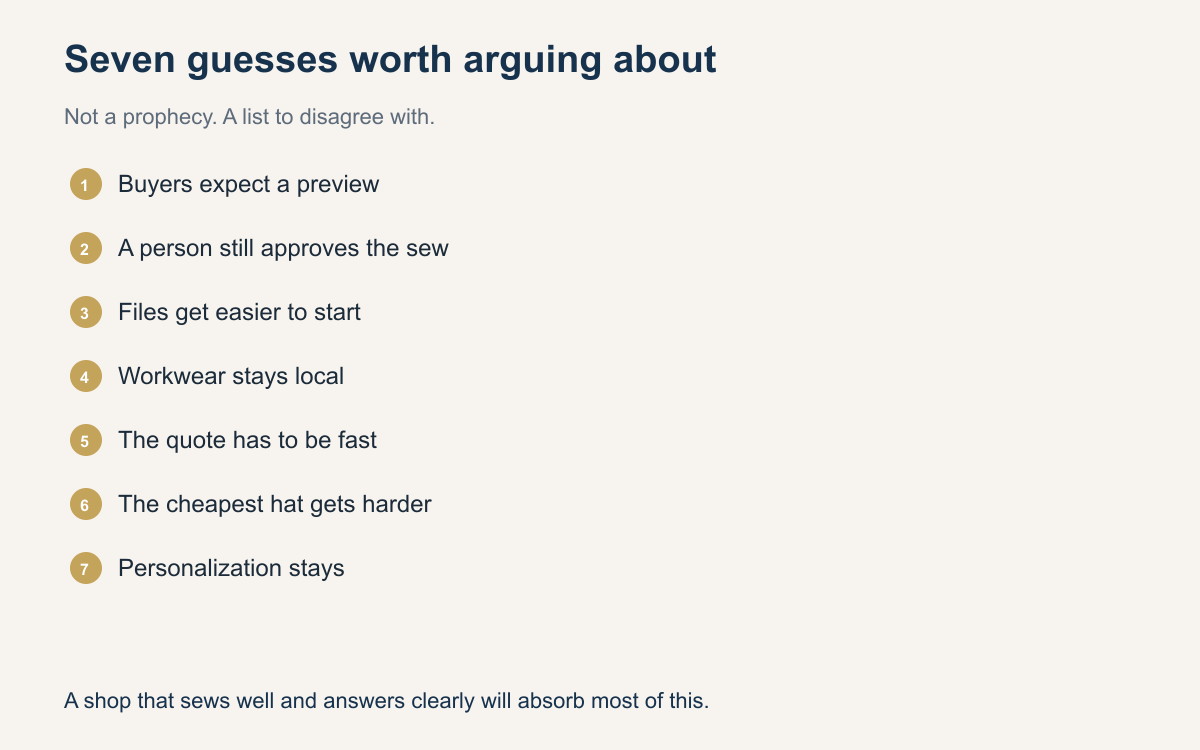
These are guesses to argue about, not a forecast to bet the lease on. Buyers will want to see the design before they pay. Small shops will still do the sewing. A fast quote will matter more than a giant machine. A shop that only wins on the cheapest hat has the harder decade.
Nobody gets 2030 right in detail, including me. A useful prediction asks what you would change if the guess were only half true. I am describing what a small shop still owns when buyers are less patient and pictures are easier to make. Disagree with any of it.
The guesses favor a shop that can show the design, answer with a price quickly, and keep sewing local work. A shop whose only win is the lowest price on a common hat will feel the decade more. Stay easy to understand, quick on a simple quote, and careful at the hoop.
Buyers will expect to see the design first
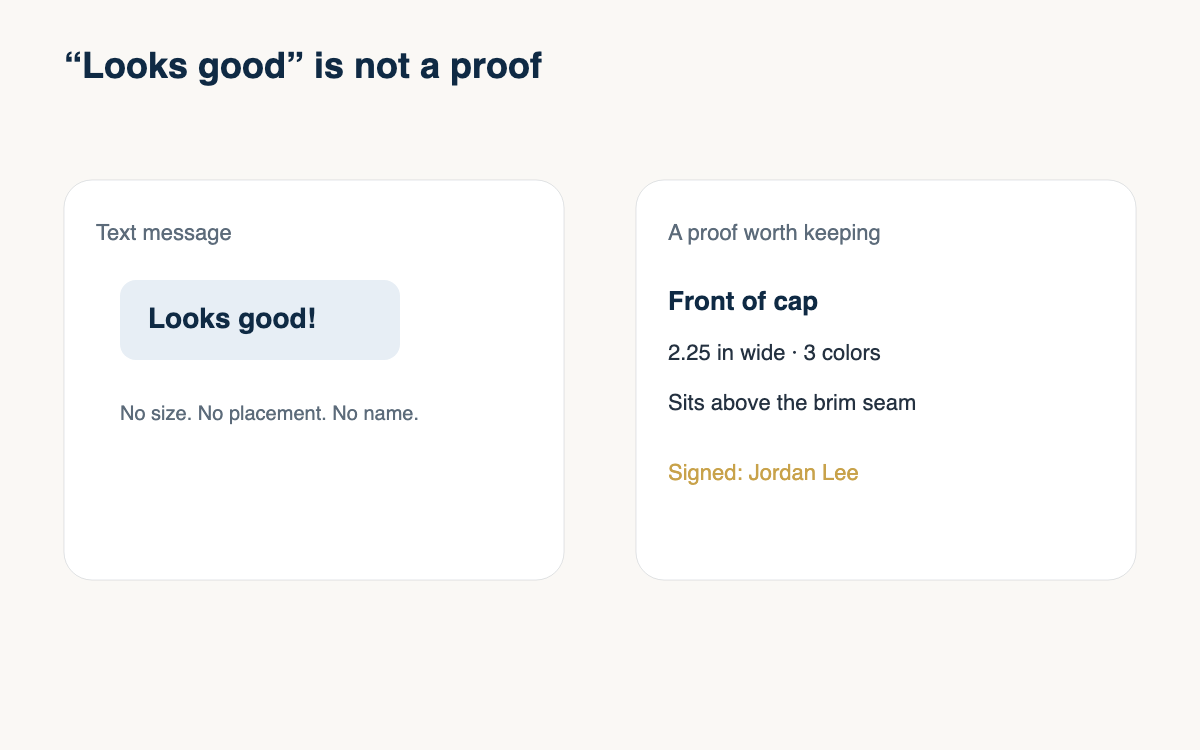
More buyers will expect to see the design on the garment before they pay. By 2030 that ask will feel ordinary. A shop that only describes placement in a text will lose to a shop that can show the mark, the color, and the size on the real blank.
This is a guess about patience. People will still want a person for the odd request. They will refuse to pay first and hope. If the path is quote, silence, then a surprise sew-out, practice the picture now and label it a preview.
Small shops still do the sewing
The sewing does not move to a mysterious elsewhere. Caps, polos, and jackets still have to be hooped by someone who can feel a bad frame. Large plants will take huge runs. Twelve caps for Thursday, or a clinic that hired two people, stays with a shop that can answer in a human voice.
Own that on purpose. The advantage is not a bigger building. It is proximity, a blank you can touch, and a redo you can do without a ticket number. Count how many current orders a distant plant would want. The rest is enough if you stop treating short runs as a lesser factory.
Files start faster and still need a person
Starting from a rough mark will get easier. A tool can trace a simple shape and hand you a first pass sooner than redrawing from a blurry photo. Underlay, density, the seam, and the choice to sew or decline are still decisions. A first pass is a draft, not a hoop.
AI can help with the words on a note and with a rough picture of the mark. A person still approves what the machine will sew. Send the draft straight to the hoop and you will ship a tiny word or a fill on mesh. Use the help to start. Keep the approval.
Local workwear does not go away
Uniforms do not fade because a feed got louder. Kitchens, clinics, crews, and shops will still need a mark on a shirt that survives washing. Those buyers want the same size next year and a person who answers. Local workwear is a dull engine, and dull engines pay rent.
You can sew gifts and still keep two workwear accounts whose calendar you understand. Ask what they replace and when a new hire triggers an order. People will change logos. They will not stop hiring.
A fast quote beats a giant machine
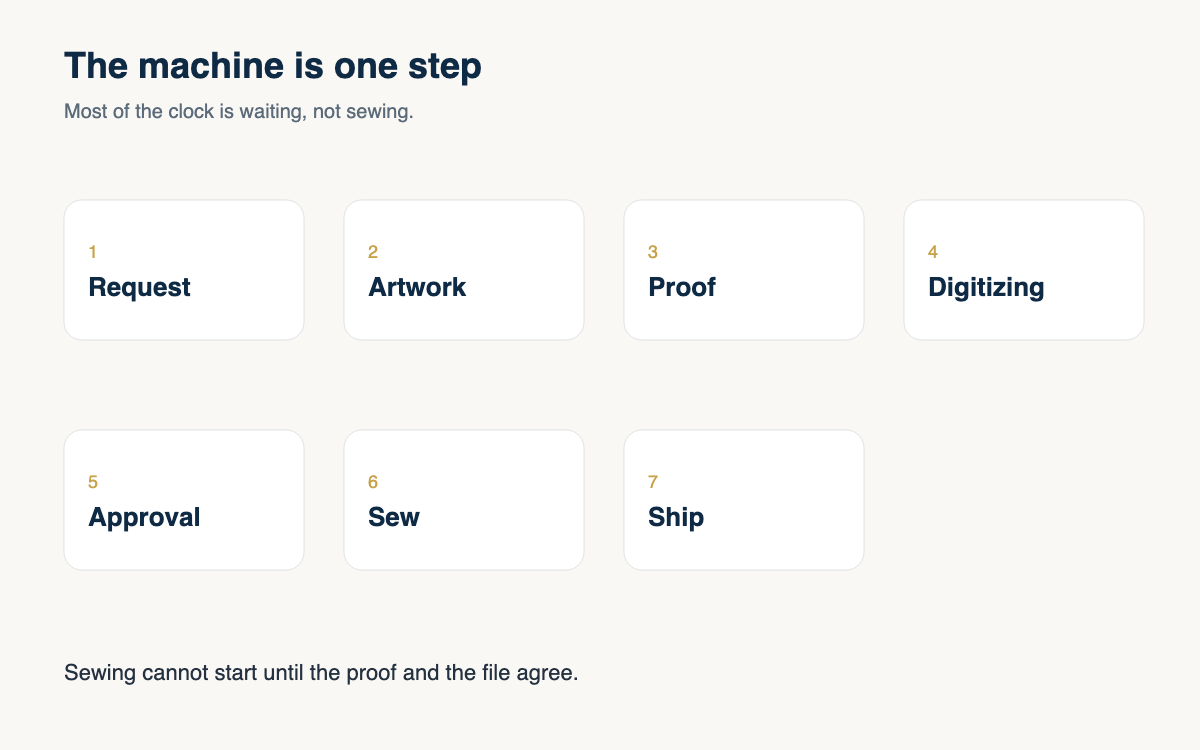
Speed of the quote will matter more than the size of the machine. A buyer comparing options will hire the shop that answers with a price, a picture, and a date while the others are still thinking. Extra heads do not help if the answer arrives the next day. A same-morning reply can beat a larger shop that makes the customer wait.
Practice that reply on a simple cap or a left chest, with a price you do not rebuild and a date you can hit. Save the slow quote for the strange jacket. The giant machine is optional in this guess. The reply is not.
Names and personal marks stay
Names, numbers, and a small mark for one person will still be wanted. People like a name in thread, and teams like a roster. A shop that can sew a short run without a fuss keeps the work. A shop that only wants a huge identical run will leave it for someone nearby.
Personal work is setup, same as now. Show the spelling before you sew and you will redo less. The next few years do not remove a misspelled name. They make the buyer expect to catch it in a picture first. Let them. The needle should be the second look.
The cheapest hat is a harder decade
A shop that only competes on the cheapest hat has a harder decade in this guess. More people can post a low number, and blanks are easy to compare. If your only sentence is a lower price on the same trucker, the fight does not use your skill. A small shop that copies a volume plant will be busy and brittle.
The way through is a sew you can show, a second product that repeats, a quote that arrives quickly, and a no for jobs that do not pay the hour. You can still sell hats. Stop letting the cheapest one be the whole identity. If cheap hats stay easy, you lose little by also being good at workwear and at answering. If the guess is right, that extra skill is the shop.
- Show the design on the real blank before you ask anyone to pay.
- Keep short-run sewing local and treat it as the work, not as a warm-up.
- Let a tool help with words and a rough picture, then have a person approve the sew.
- Keep at least one workwear reorder and learn when it comes back.
- Answer a simple quote the same morning, with a price and a date.
- Show spelling on names before the needle, and price the setup honestly.
- Give buyers a reason to choose you besides the lowest price on one hat.
Hold these lightly. A shop that sews well and answers clearly will absorb most surprises. Prepare for the picture before payment, the fast quote, and a life that is not only the cheapest hat. A person still decides what the needle sews.
A question for the group
Which of these seven guesses do you think is wrong, and what are you already doing as if one of the others were true?