
Tools
Can a small embroidery shop keep up with print on demand?
Print on demand made the catalog, the preview, and the status note feel instant. A shop with a machine can speed up the quote, the status, and the file name. It cannot pretend a click will hoop a cap. Sew that difference on purpose.
A print on demand seller can publish many designs in a weekend. The picture, the price, and the payment happen on a screen, and a building the seller may never visit prints the shirt. Buyers got used to that speed. They expect a preview tonight and a tracking note without calling anyone. That expectation walks into your shop even when you own the needle, the thread, and the backlog.
You will not beat that model by pretending embroidery is a click. You can copy the parts that were never about ink. A clear quote. A status a buyer can read. A file name an operator can find. The hoop, the backing, and the decision to redraw a logo stay in your hands. Those are why the hat looks like your work.
What print on demand took off the table

Print on demand sped up the storefront more than the craft. A catalog of blanks, a preview, a checkout, and a message when the box moves. The print file is often a flat image a shop in another city prints without calling the seller. If you judge your week against that week, you will feel slow, because you are comparing a screen to a needle. The comparison is unfair and the buyer does not care.
Your buyer is not buying a distant print node. They are buying a sewn object you can stand behind. The delay they hate is rarely the minutes of sewing. It is silence. They do not know the price, they do not know if you received the art, and they do not know if the box left. Those are the delays a small shop can shrink without buying a second machine or hiring a night shift.
What still happens at the machine
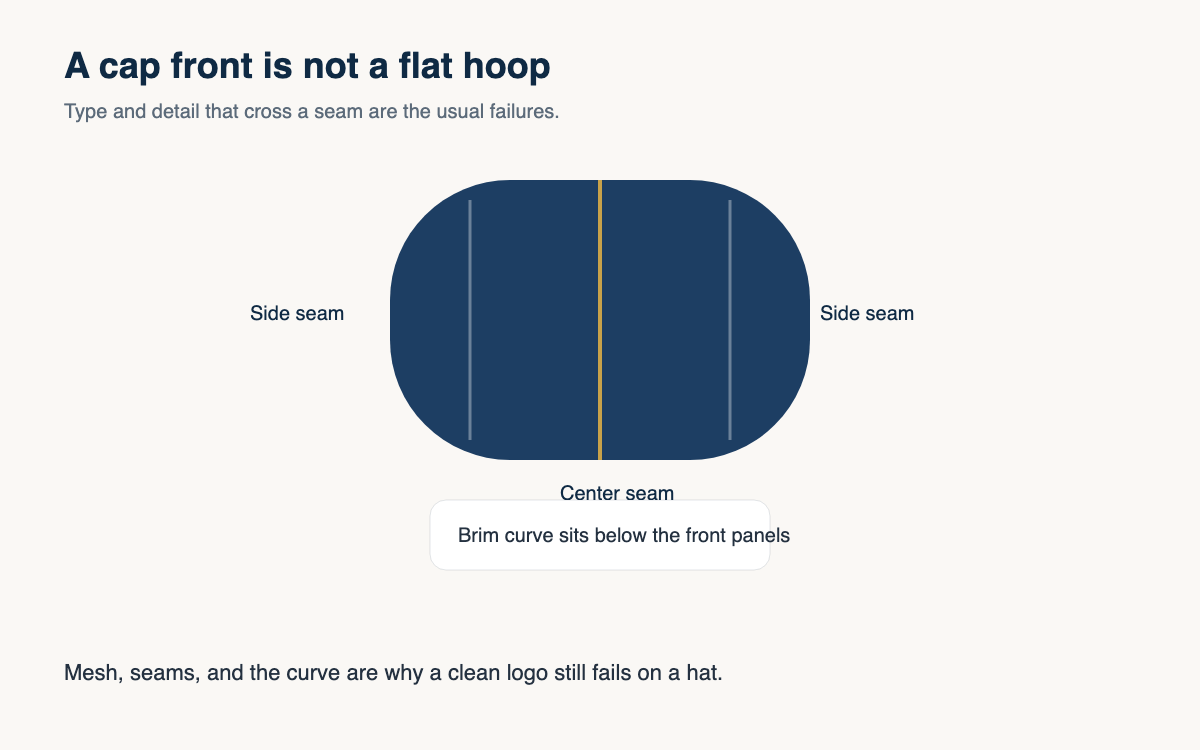
Hooping a structured cap is a hand skill. The frame, the seam, the curve, and the band all have to sit right or the front buckles. No status message does that work. Choosing cutaway or tearaway, topping on fleece, and a needle that matches the shirt is also a hand skill. You can write the rules on a card. You still have to look at the goods and feel whether the hoop is lying.
Digitizing is a judgment. A logo that arrived as a photo needs a redraw, an underlay, and a density for that cap. You can name the file so it is easy to find. You cannot honestly tell a buyer that a picture became a finished sew with nobody in the middle. If you talk as if the machine decides, you will sew jobs you should have redrawn or refused.
Automate the quote, the status, the file name
The quote can follow a rule you already believe. A left chest under a set width is one price. A cap front is another. A second placement is a line you add on purpose. Quantity breaks are written down, not remembered. When the rule is visible, you stop retyping the same note, and a helper can quote the common jobs while you sew the odd one. Unusual art still gets a human look before the number is final.
Status can be a short list you and the buyer both trust. Received, proof sent, approved, sewing, packed, shipped, ready for pickup. Update it when the fact changes, not at the end of the week. The file name can carry the order number, the blank, the color, and the placement. A name like final-final is how the wrong logo lands on the right shirts. A boring name takes seconds and saves a run.
Do not pretend the hoop is a click
Some offers sound hands-off and then show a photo of a finished cap. The photo hid the hooping, the trim, and the cap that was crooked and had to be redone. If you sell that story, you will underprice the minute you spend seating the frame, and you will anger the buyer when a rush is actually a person at one machine. Say the turnaround you can sew. Decline the one you cannot.
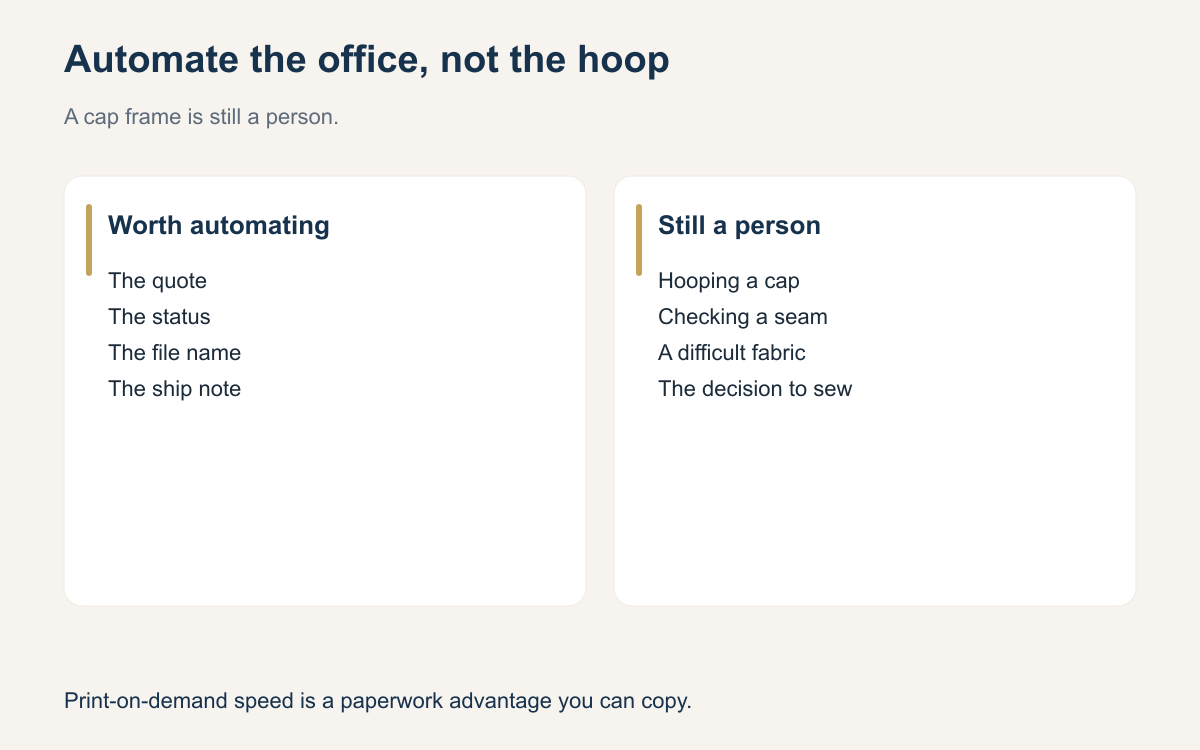
Keep a written line between the screen and the hoop. On the screen: the quote rule, a preview labeled as a preview, the status, the file name, and the ship note. At the hoop: backing, placement against the real seam, a sample when the art is risky, the sew, the trim, and a look in daylight. You can get faster at the screen this month. The hoop gets faster when the files are cleaner, not when you skip the frame.
A split you can post on the wall
Write the split where the person who answers messages can see it. If a task is on the screen side, do it the same way every time and do not wait for the owner to be free. If it is on the hoop side, it waits for someone who can sew. Mixing the two is how a cheerful message promises a same-day cap the machine cannot hoop before you close.
Review the split when you add a blank or a placement. A tote with a zipper may move a job from a simple quote to a hoop problem. The rule is not a cage. It is how a small shop keeps up with the speed buyers learned from print on demand, without lying about what a needle still requires from a person.
- Speed up the common quote with a written price for each placement and quantity.
- Speed up the status words: received, approved, sewing, and shipped.
- Speed up the file name with the order, the blank, the color, and the placement.
- Keep hooping a cap in your hands, including the seam, the curve, and the frame.
- Keep backing, topping, and needle choice with the person who can feel the fabric.
- Keep the choice to redraw or refuse art with the person who will sew it.
- Keep the daylight check of the sew-out with a person, not with a tracking note.
Keep up with the part of print on demand that was always communication. The quote, the status, and the file name can move while you are in the hoop. The hoop stays a person. A small shop that tells the truth about both will look slower in a feed and better in the hand, which is the comparison that matters after the box arrives.
A question for the group
What part of the order can you speed up this month, and what part will you keep in your hands because a machine cannot hoop a cap by itself?