
Machines
Which embroidery needle to put in the machine
The needle is a wear item. The point, the size, and the age of it change thread breaks, fabric damage, and how clean the stitches look.
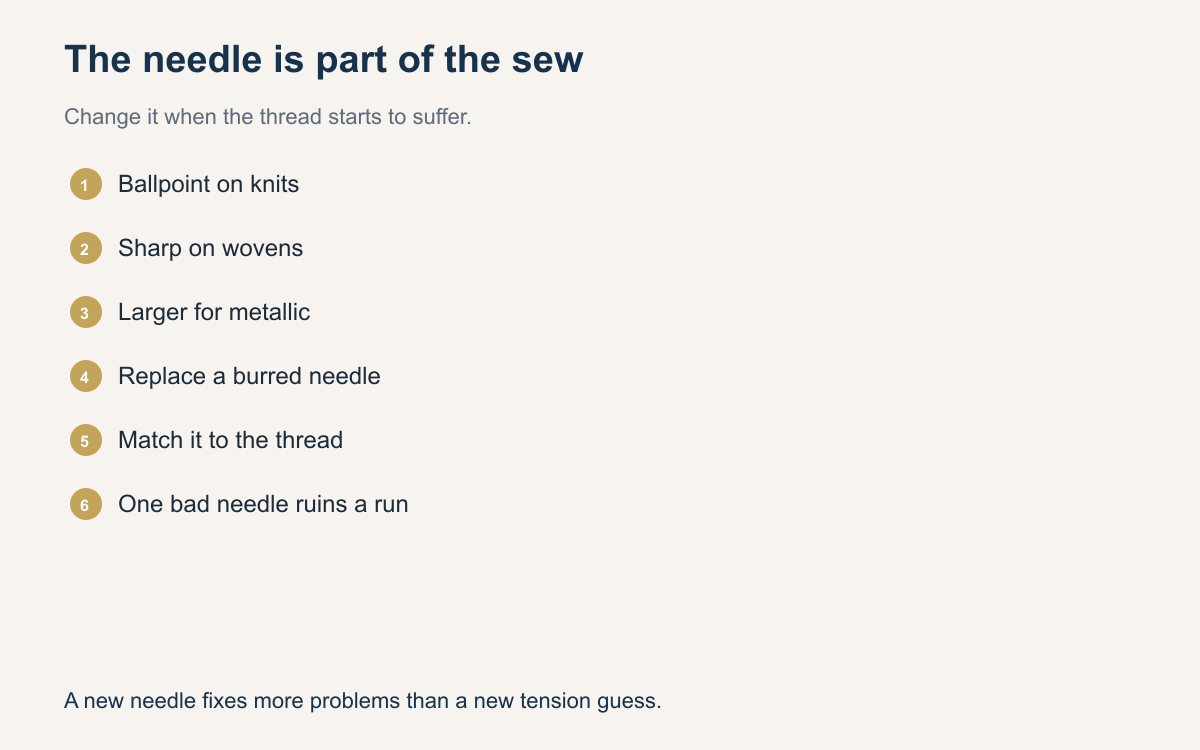
When thread breaks, shops change tension, then the cone, then the file. The needle is the cheaper thing to change and the one that is often actually dull. A needle is a blade that punches every stitch. Once the point is burred or the eye is sharp, it shreds thread and it can cut a knit. No amount of digitizing fixes a damaged needle.
You do not need a drawer of exotic needles to sew ordinary logos. You need the right point for the fabric you hoop most, a size that fits your usual thread, and the habit of throwing a needle away when the sew-out goes fuzzy. Specialty jobs, metallic thread especially, ask for a different needle and a slower machine. Treat those as a setup, not as a surprise in the middle of a run.
The point has to match the fabric
Knits want a ballpoint, sometimes called a jersey needle. The rounded tip slips between yarns instead of cutting them. A sharp needle on a polo or a tee can leave a run or a hole that looks like a thread problem. Wovens and many stable cap fronts are happier with a sharp, which pops a clean hole and keeps the stitch from sitting on top of the cloth. If you sew both all day, you are changing needles when you change blanks, or you are compromising one of them.
Many shops keep a default for the work they do most, often a 75/11 ballpoint if the week is polos and tees, and they switch when the blank is a tight weave or a heavier good. That default is a shop rule, not a law. Sew a scrap when you are unsure. Holes around the design, or a knit that ladders, mean the point is wrong or the needle is dull. Fuzzy thread with a good point often means the size or the eye is wrong for that thread.
Size follows the thread and the fabric
A smaller needle makes a smaller hole, which helps fine fabrics and small lettering. It also has a smaller eye, so a heavier thread will shred. A larger needle protects thicker thread and punches heavy goods, and it leaves a bigger hole that can show on a thin shirt. For everyday polyester or rayon logos, shops commonly live around a 75/11 and move up when the thread or the fabric gets heavier. Metallic and some specialty threads want a larger needle, often with an elongated eye, so the thread is not sliced on every pass.
Do not solve a break by jumping two sizes and leaving it there. The larger needle may stop the break and start a row of visible holes. Change one thing, sew a few inches, and look at the fabric as well as the thread. If you are sewing metallic, also slow the machine down. A bigger needle will not save metallic thread that is flying at a speed it cannot survive. Topping and a shorter stitch in the file matter there too. The needle is only one part of that setup.
Replace it before the run is ruined
Needles are cheap compared with a rejected garment or an hour of breaks. Change the needle when you hear a popping sound, when thread starts fraying, when you snag the fabric, or after a hit on the hoop. Some shops also change on a schedule, once a shift or after a long run, because a needle can be tired before it is dramatic. Pick a rule you will follow. “When I remember” is how the afternoon orders look worse than the morning ones.
A new needle will not fix a burr on the throat plate, a hook that is out of time, or a thread path that skipped a guide. If you have changed the needle and the thread still shreds in the same way, stop swapping cones and look at the metal the thread touches. The needle is the first check, not the only one. Keep used needles out of the cup of “probably fine” needles. Once it is out of the machine, it is trash. The next person should not have to guess.
Make the needle part of the job setup
Write it next to the hoop and the backing when a job is fussy. “75/11 ballpoint, poly thread” on a polo order keeps the reorder from being sewn with whatever was left in the machine after a woven job. On a shared machine, the last operator’s needle is a silent setting. Look at it before you press start, the same way you look at the hoop.
Buy needles in the two or three sizes you actually sew, from a brand you have already tested, and keep them where the operator stands. A perfect needle in a drawer across the room will not be used at the moment a thread breaks. Specialty needles, for metallic or for leather, can live with those jobs so they are not grabbed for a polo. The system is simple on purpose. The shops that fight their machines all day are often sewing with a mystery needle from yesterday.
- Ballpoint for knits, sharp for wovens that need a clean pierce.
- Match the eye to the thread. Heavier thread needs a larger needle.
- Use a larger needle and a slower speed for metallic.
- Replace a needle that pops, shreds thread, or has hit the hoop.
- Do not put a used needle back in the good cup.
- Note the needle on jobs you expect to sew again.
Tension and digitizing matter, and so does the piece of steel making every hole. A fresh needle of the right point fixes a class of problems that look like bad thread or a bad file. It costs less than the argument with the customer about a hole in a polo.
Tomorrow morning, look at the needle in the machine before the first order. If you do not know what point it is, or how long it has been there, change it and label the new one. That is the whole habit.
A question for the group
How often do you actually change needles, and what was the sew-out that taught you the old one had been in there too long?