
The industry
Would you take embroidery jobs from a marketplace?
A marketplace can hand you jobs you did not have to hunt. It can also hand you vague art, a fee that eats the margin, and a deadline that ignores the queue you already promised. Take the clear jobs when the numbers work. Refuse the rest. A listing is not a duty.
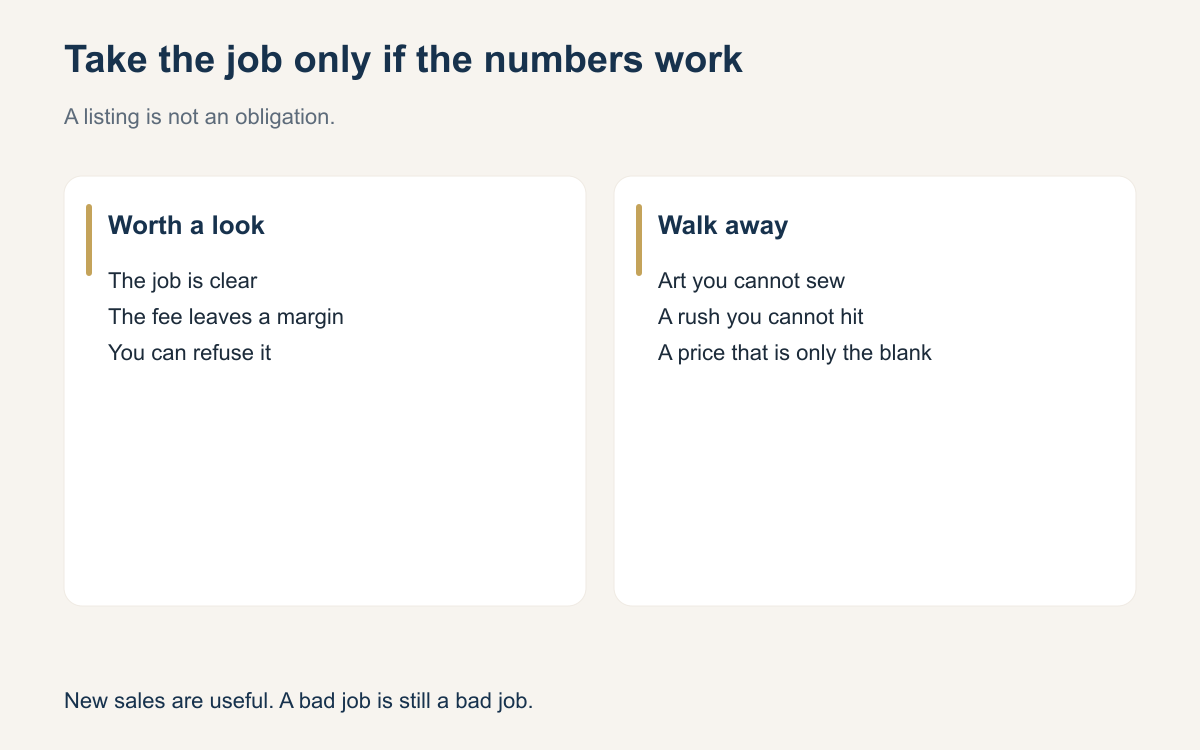
A small shop hears about a job marketplace and feels two things at once. Relief, because someone else found the customer. Suspicion, because the request might be a mess with a clock. Both feelings are fair. The useful question is whether this job, after the fee, still pays the hour and matches work you sew well.
You are allowed to look and then say no. That right is the safety in the idea. A shop that accepts every listing will sew problems that belong to other people, at a discount. A shop that refuses everything will miss a slow Tuesday that could have been a clean cap order. Read each job the way you read a walk-in: clarity, margin, and the option to walk away.
Someone else already found the buyer
The real benefit is time you did not spend finding the customer. On a week when local teams are quiet, a clear order can keep the machine moving. The request is already in words, and for a one-person shop that can be worth a fee. You still have to sew it. The lead did not make the sewing easier.
Do not treat the list as a personality. Some weeks you take two jobs. Some weeks you take none. The marketplace did not hire you. It offered a list. If you need it in order to feel busy, you will say yes too fast. If you use it to fill gaps you can actually sew, it stays a tool. A tool is allowed to sit unused.
Job quality is the first filter
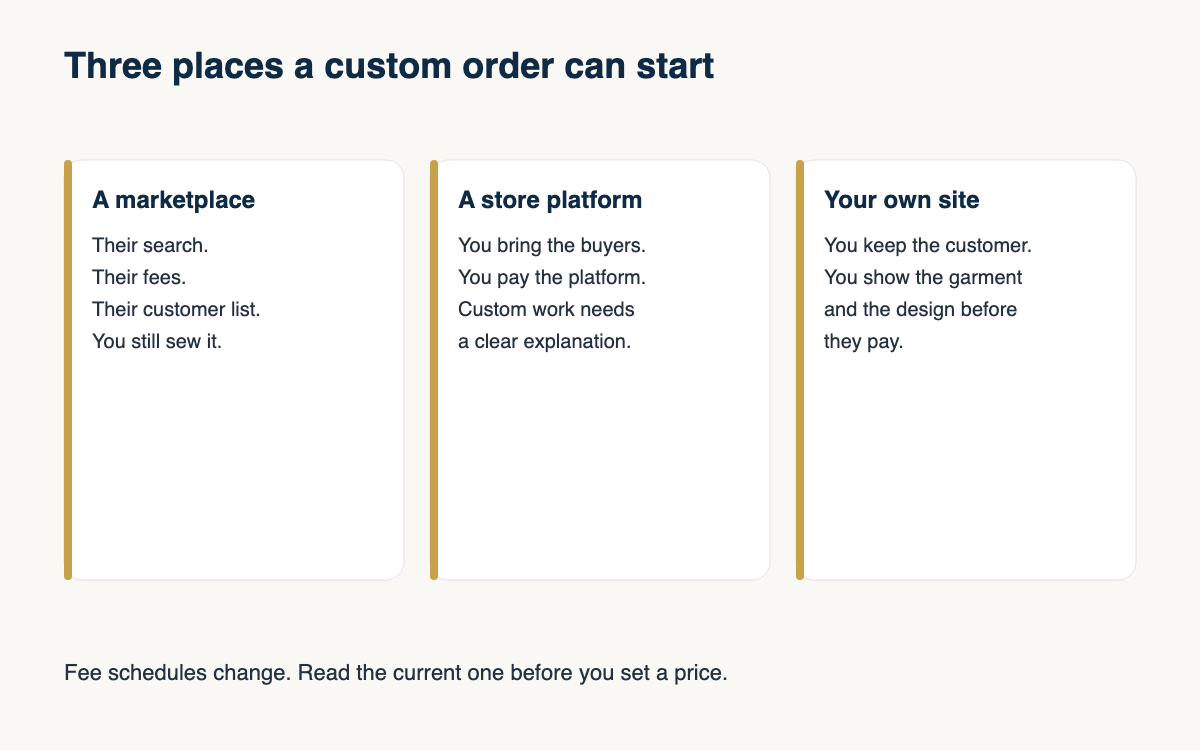
Quality varies more than the ads suggest. A good listing shows the blank or lets you use yours, plus the count, the placement, the date, and art a needle can sew. A bad listing is a photo of a jacket, a hopeful paragraph, and a deadline of tonight. You already know how to spot the second kind at the counter. A feed does not change the test.
Read the art at sew size before you fall in love with the fee. Tiny type, too many colors, a photo that wants to be thread, a design that must cross a seam: those are the same nos you use locally. If the listing hides the art, ask once. If it stays vague, refuse. Vague art plus a firm date is how a Saturday gets donated.
The fee has to leave a margin
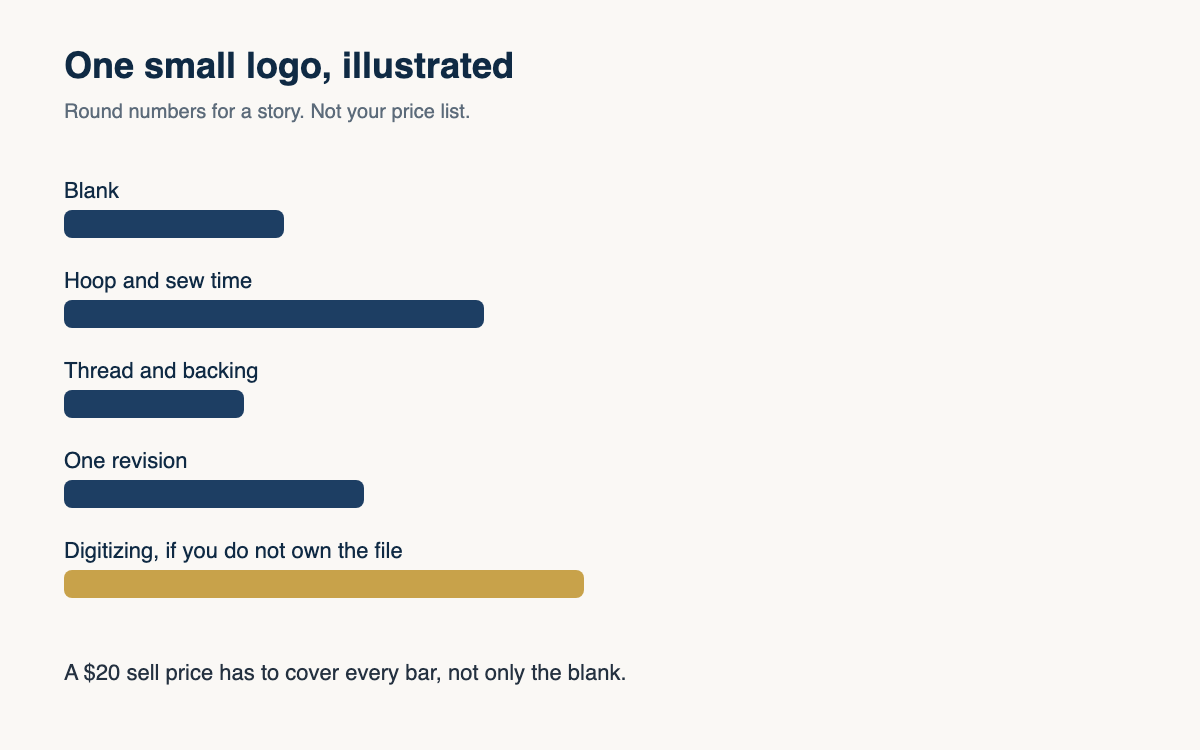
Every fee comes off the top. A job that looked fine at the customer price can be a hobby after the cut. Write sew time, the blank if you supply it, thread, and the hour you want. Subtract the fee. If the remainder would embarrass you on a local order, it should embarrass you here. The hunt you skipped does not discount the hour.
Use an illustration, not a rate card. Suppose a listing pays eighty dollars for a small run and the fee is a fifth of that. Call those numbers an illustration. Sixteen dollars leaves, and the rest has to cover blanks, thread, and time. Do that math before you feel flattered. If the goods are ones you would refuse at the counter, the fee is the smaller problem.
Expectations you did not set in person
In the shop you can say a design is too small and watch the reaction. On a marketplace the expectation may already be set: a low price, a perfect match to a picture you did not make, and a clock that does not know about the team order due Friday. Read the notes for promises someone else made. A same-day complex back is a deadline you have not accepted yet.
You can sometimes reset the expectation before you accept. State the date you can hit, the size you will sew, and what you will not attempt. If the listing has no room for that, skip it. Do not accept and then negotiate with a needle. Jobs that go well match work you have done before. New heroics for a stranger, on a timer, earn public complaints.
You are allowed to refuse
Refusal keeps the shop. Decline unclear art. Decline goods you would not take at the counter. Decline a number that does not pay the hour after the fee. Decline a date that pushes a promised local job aside. A listing is not an obligation. A streak of declines is not a failure. The failure is a yes you resent by the time you hoop it.
Write a short rule before you scroll, so hunger does not decide. For example: simple cap and left-chest work only, your blanks only, several days of lead time, and a remainder after fees that clears your hour. Your rule can differ. The point is to have one. Break it only when you would take the same job from a neighbor who walked in.
Run one listing, then stop scrolling
Open one listing and use the filters in order. Can you see art a needle can sew? Do you know the blank? Does the date fit work you already promised? After the fee, does the hour work? A single no means close it. Four yes answers means take it and sew it like a local order: notes if the goods are not yours, a file you can find, and a date you will hit.
Then stop scrolling. One decision is work. Forty maybes is stalling. If nothing today fits, go back to the local follow-up. The list will still be there tomorrow.
- Read the art at sew size before you study the payout.
- Subtract the fee, then check blanks, thread, and the hour you want.
- Refuse vague art, goods you would refuse at the counter, and dates you cannot hit.
- Take jobs that match work you already sew cleanly.
- State your date and your limits before you accept, or leave the listing.
- One clear job can fill a gap. A pile of maybes is not a plan.
Marketplace work fits a small shop when the spec is clear, the fee still leaves a margin, and you can walk away from the rest. It becomes a bad habit when you accept listings to feel busy. Use the same judgment you use at the counter. The new number is the fee. Put it in the math, then decide like an owner.
A marketplace of embroidery jobs is worth a look when the job is clear, the fee still leaves a margin, and you can refuse the ones that are not. Stitchify Hub has a marketplace side where shops can see jobs. Take the job only when the numbers in this article still work. A listing is not an obligation.
A question for the group
What is the last outside job you accepted mainly because it was offered, and would the fee and the art still pass the test you use for a local customer?