
Growing the shop
When a customer wants endless design changes
Endless design changes are a missing limit, not a difficult person. Put a number of changes in the quote, treat approval as a stop, price the next version, and you can refuse a fifteenth tweak on a small order without being rude.
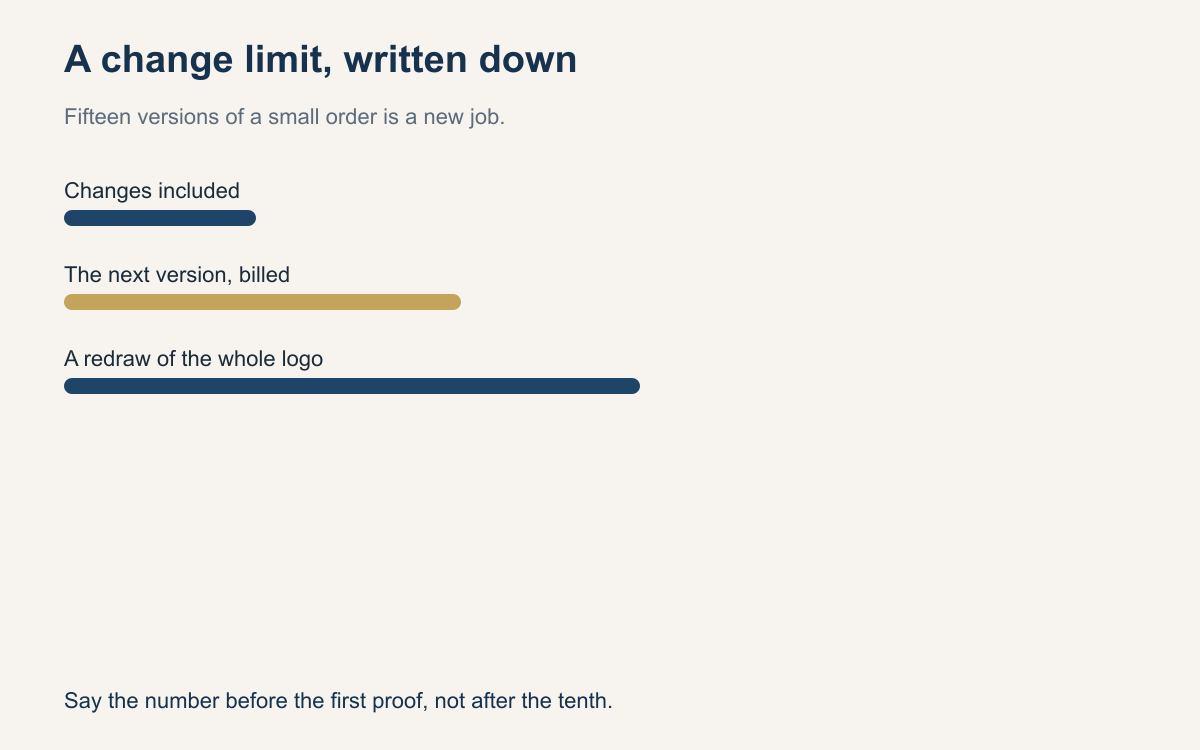
A buyer who asks for a fifteenth change is usually nervous, not cruel. The mark will sit on a shirt a boss, a team, or a family will see. They keep adjusting because nobody told them when adjusting ends. If you sew every tweak for free, you teach them that the price includes unlimited design, and a small order becomes a long art project.
You can stop the loop without a speech about boundaries. Put a number in the quote, make approval a real stop, and name the price of a new version before they need it. Then, when the fifteenth change arrives, you are not inventing a rule in anger. You are pointing at a rule you both already had, and offering a clear choice.
Put a number of changes in the quote
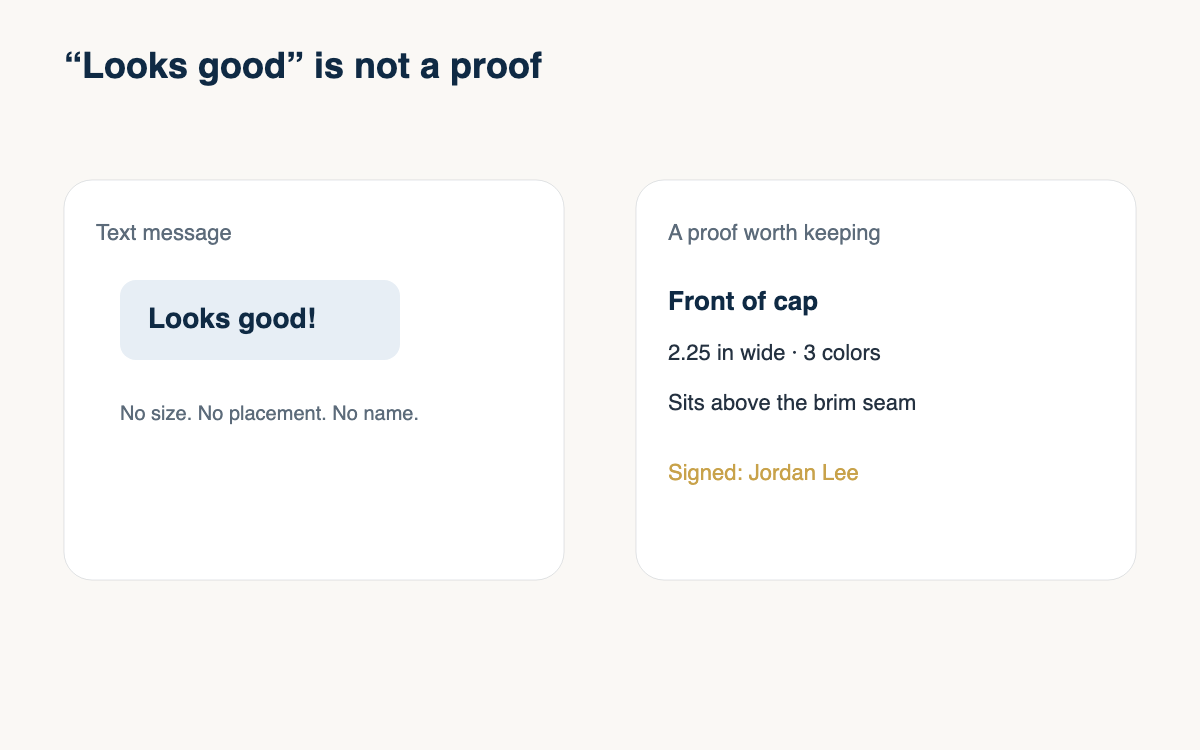
Pick a number you can live with and write it where the price is. Two rounds of changes after the first proof is a plain rule for many shops. A change means new words, a new color, a new placement, or a different mark. Fixing your own mistake is not their change. If you sewed the wrong color or missed a word they had already approved, that redo is on you.
Say the number before you start, in the same note as the price and the date. A limit that appears after the fourth revision feels like a penalty. A limit that was in the quote feels like the shape of the job. If they need a long design exploration, that is a different product with a different price. Do not hide a design retainer inside a twelve hat sew order and hope they stop early.
Treat approval as the end of the loop
Approval has to be a message you can keep. A reply that says the proof is accepted is enough. After that, you order blanks or you hoop, and the date starts to mean something. If approval is a vibe, they will keep editing while you sew, and both of you will call it a miscommunication. Write back one sentence that repeats the version, the placement, and the date, and ask them to confirm that sentence.
Once they confirm, further art changes restart the clock and the fee. Be specific so it does not feel like a trap. A spelling fix you missed is still your error. A new tagline after the yes is a new version. Hold the production file where you can point to it. The argument gets ugly when nobody can find the picture they approved, and you are both describing different hats from memory.
Price a new version before they ask
Decide the price of a new version on a calm day. A round number such as 35 dollars, plus two extra business days, is easy to say and easy to repeat. Use the same number for a small text change and for a new icon, or publish two tiers if those jobs truly differ. The point is that the next version has a price before the email arrives, so you are not negotiating with a knot in your stomach.
Tell them what the fee covers. It covers a new proof and a new file, not a promise to explore forever. If they want three directions, that is three versions or a paid design session. Put the number in the original quote in one line: additional versions are 35 dollars and add two business days. Most people accept a rule they saw at the start. They fight a number that appears as a surprise.
A small order cannot fund a fifteenth change
Look at the math on a small job before you feel guilty. Eight hats with 18 dollars of decoration is 144 dollars. The time to rebuild a layout is nearly the same on eight hats as on two hundred. By the third unpaid redo you may have spent the profit, and by the fifteenth you are paying to work. The limit is how a small order stays a small order instead of becoming unpaid design.
You do not have to show them the hour math. You do have to believe it, or you will apologize for a fair rule. A large reorder can absorb more conversation because the sew time pays for the talk. A one-time gift or a tiny staff order cannot. Say that kindly if it helps: this run is small, so the included changes are the two we already used. The next idea is a separate version.
Say no in a way that keeps the relationship
The rude version is a short scolding. The shop version offers a choice and still sounds like a person. You can write: I want this mark to look right for you. This order includes two rounds of changes after the first proof, and those two are used. I can sew the version you approved on the date we set, or I can open a new version for 35 dollars and move the date by two business days. Tell me which one you want.
Then stop. Do not add a paragraph of frustration. Do not sew the fifteenth change while resenting it, because the resentment shows up in how fast you answer the next buyer. If they choose the paid version, do it cheerfully and reset the count. If they choose the approved version, sew that and do not sneak in half of the new idea. People remember whether you were clear. They rarely remember the exact icon you refused to redraw for free.
- Write the included number of changes in the quote, next to the price.
- Define a change as new words, color, placement, or a different mark.
- Keep your own mistakes outside their count.
- Get a written yes that names the version and the date.
- Price the next version in advance, with the days it adds.
- Offer the approved sew or a paid new version, and wait for the choice.
A limit is a kindness to the buyer and to the shop. They get a finish line instead of an endless proof. You get a small order that can still make money. The next time a fifteenth tweak arrives, you will not need a new personality. You will need the sentence you already put in the quote, and the willingness to let them choose.
A question for the group
How many art changes does your current quote include, and have you told the buyer that number before the first proof goes out?