
Growing the shop
How to compete when you have one embroidery machine
One embroidery machine will not win a price fight on five hundred blanks. It can win on turnaround for small runs, a niche a large shop ignores, a real conversation with the buyer, and the awkward jobs a big shop refuses.
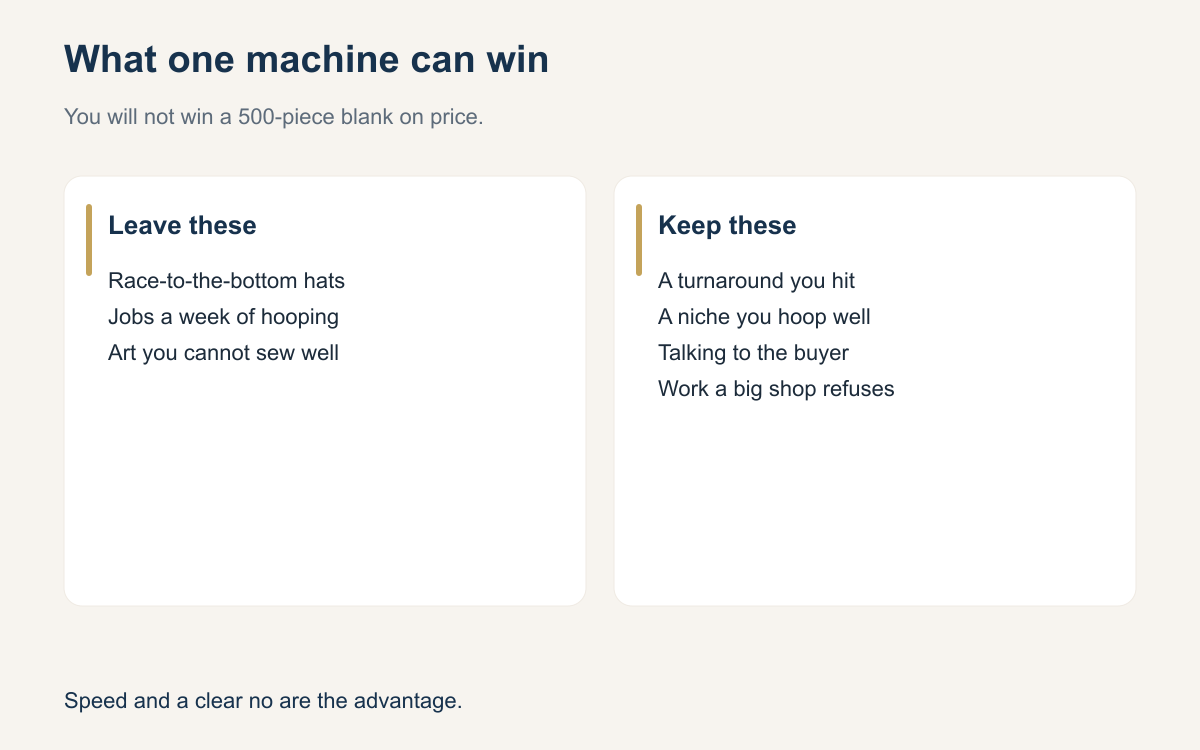
A shop with a row of heads will beat you on a pile of identical polos. They sew faster, they buy blanks by the carton at a price you cannot touch, and they can bid a number that only works if the machine runs all day. Trying to win that bid on one head is how you fill the month with work that pays like a hobby and leaves no room for the jobs you are actually good at.
You can compete. You will not compete by pretending to be a factory. You compete on the work a factory is built to avoid: a short date, a specific niche, a buyer who wants a person on the phone, and a sew that is awkward, small, or fussy. One machine is an advantage there, because you are the person who hoops it and the person who answers.
Decline the five hundred piece price fight
Five hundred blanks on one machine is not a challenge to rise to. It is a calendar problem. You may be hooping for days, you may have paid for goods you cannot return, and one broken needle, one bad cone, or one sick day moves a date the buyer thinks is easy. A shop with many heads finishes that run while you are still on the first carton, and their price assumes that speed.
Say no early, and say what you can do instead. Offer a sample, a first batch of a size you can finish this week, or a referral if you know a shop built for volume. Losing the bid is cheaper than winning it and spending the month underwater. Your reputation is the date you hit on the work you accept, not the courage of taking a job your machine cannot clear.
Win the jobs that need a short turnaround
A large shop schedules production in batches. Your Tuesday can still be open. Twelve jackets by Friday is a promise you can keep because you will hoop them yourself and you can see the queue. That speed is worth money to a buyer with an event, a new hire, or a game. Charge for the rush in the open, as a shorter date with a real number, not as a panicked favor.
Protect the promise. A short turnaround dies if you also said yes to the five hundred piece job. Keep a simple view of the days already sold. When a rush fits, answer the same day with the date and the price. When it does not fit, say the next true date. Buyers who need speed will pay a one-machine shop that tells the truth. They will not pay a second time if you missed Friday because you were flattered by a huge order.
Own a niche a big shop will not bother to learn
Pick a lane you can talk about without reading a script. One town sport. One trade. Dog bandanas. Jackets for a single industry. A large shop wants orders that look like the last order. They will not memorize the roster rules of your local league or the pocket layout of one work jacket. You can. That memory is a product.
Make the niche visible. Show the real sew-outs, name the blanks you keep, and state the dates you can hit in that lane. You do not need to be the only embroiderer in the region. You need to be the obvious call for that buyer. A niche also keeps your samples useful. Every good sew-out becomes proof for the next person in the same lane, instead of a random photo on a grid of unrelated hats.
Talk to the buyer like a person
A big shop gives the buyer a ticket number. You can answer the question about thread color, remember that the coach wants the year under the mark, and catch a spelling error before it is sewn twenty times. That conversation is not a distraction from production. On one machine, it is part of why they hired you instead of the cheaper bid.
Keep the talk tied to the order. Confirm the blank, the placement, and the date in writing after the call so the friendliness does not turn into a foggy spec. You are allowed to be warm and still have a limit on changes and a price for rush. The large shop is not cold because cold is a brand. It is cold because the system cannot stop for one roster. You can stop. Use that, and do not give the stop away for free on every message.
Sew the work a large shop turns away
Listen for the jobs they refuse. One-offs. A jacket with a zipper close to the mark. A small run with individual names. A placement that is fussy. A sample they will not hoop because the count is fourteen, not four hundred. Those refusals are your list. Fourteen canvas jackets, left chest, zipper nearby, due Thursday, is a job a volume shop shrugs off and a job you can plan one hoop at a time.
Do not confuse refused work with unpaid work. Awkward still needs a price that includes the slow hooping and the risk. Simplify the art if the placement is tight, and show the buyer the simpler version before you sew. Competing is not discounting until you are busy and broke. Competing is choosing the jobs where one machine, one person, and a careful hoop are worth more than a row of heads that will not stop for the zipper.
- Pass on five hundred identical blanks that a multi-head shop will price lower.
- Sell a true short date on runs you can hoop yourself.
- Name a niche and keep the blanks and photos that prove it.
- Answer the thread, spelling, and placement questions a ticket system drops.
- Take the awkward small jobs a volume shop refuses, and price the extra hoop time.
- Keep the calendar honest so a rush date is a promise, not a wish.
You do not have to become a factory to stay in business. You have to stop auditioning for factory work. Let the big runs go. Fill the machine with short dates, a niche you can say in one sentence, buyers who get a real answer, and the sew-outs a large shop already turned down. That is a full book, and it is a book one machine can actually finish.
A question for the group
Which inquiry on your bench right now is a five hundred piece fight you should leave, and which is a small awkward job you should price and keep?