
Tools
Can AI turn any image into embroidery?
An image tool can draw a logo, a photo, or a gradient in a minute. Embroidery still needs a person to set underlay and density and to decide whether the mark should be sewn. Tiny detail, too many colors, thin type, and photographs are the usual reasons a pretty picture fails in the hoop.
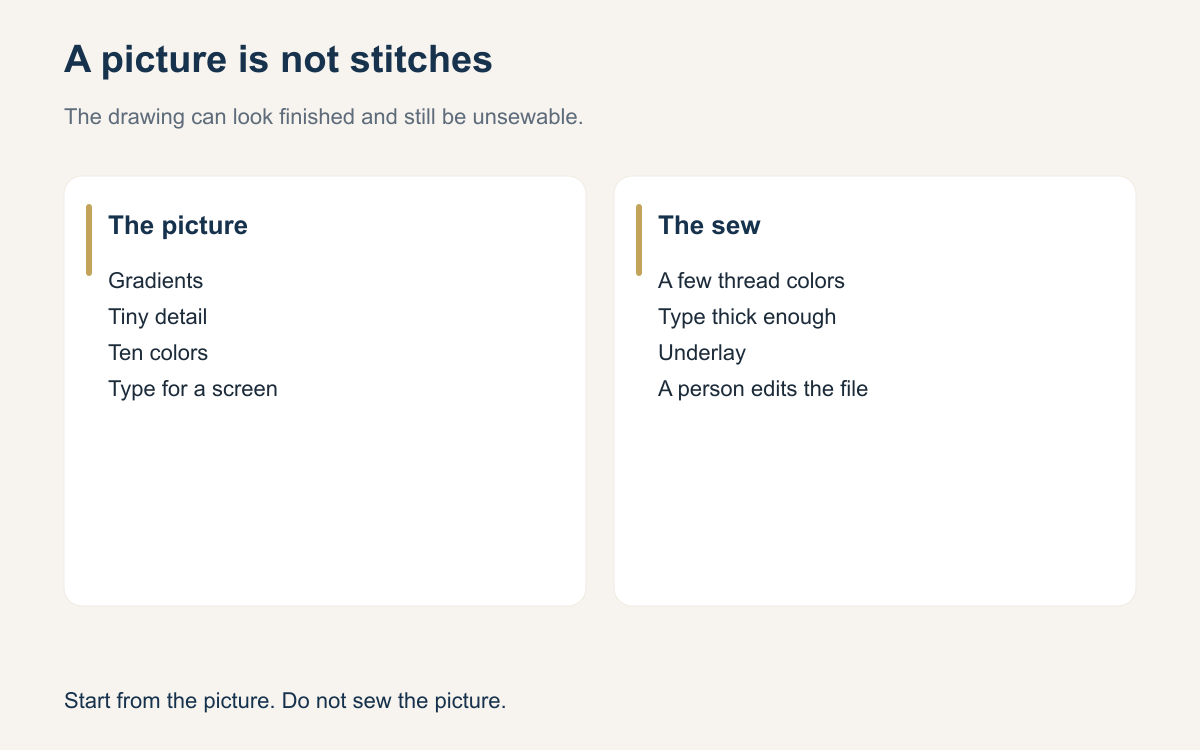
A customer can send a picture that looks finished on a phone. An image tool may have drawn it, or the customer snapped a photo of a sign. You can zoom in and see every leaf, a fade from gold to white, and a tagline in a thin script. The screen is kind to that art. Thread is not. A needle makes one stitch at a time in a color you pull from a rack, and the fabric moves while the needle works.
The useful question is not whether a tool can make an image. It can. The question is whether that image can become a sew-out you will put your name on. A picture holds shapes and colors. A stitch file holds a sequence, an underlay, a density, and the stops where the thread trims. Someone has to choose those. If you skip the choice, the machine will still run, and the hat will show the skip.
A picture is not a stitch file
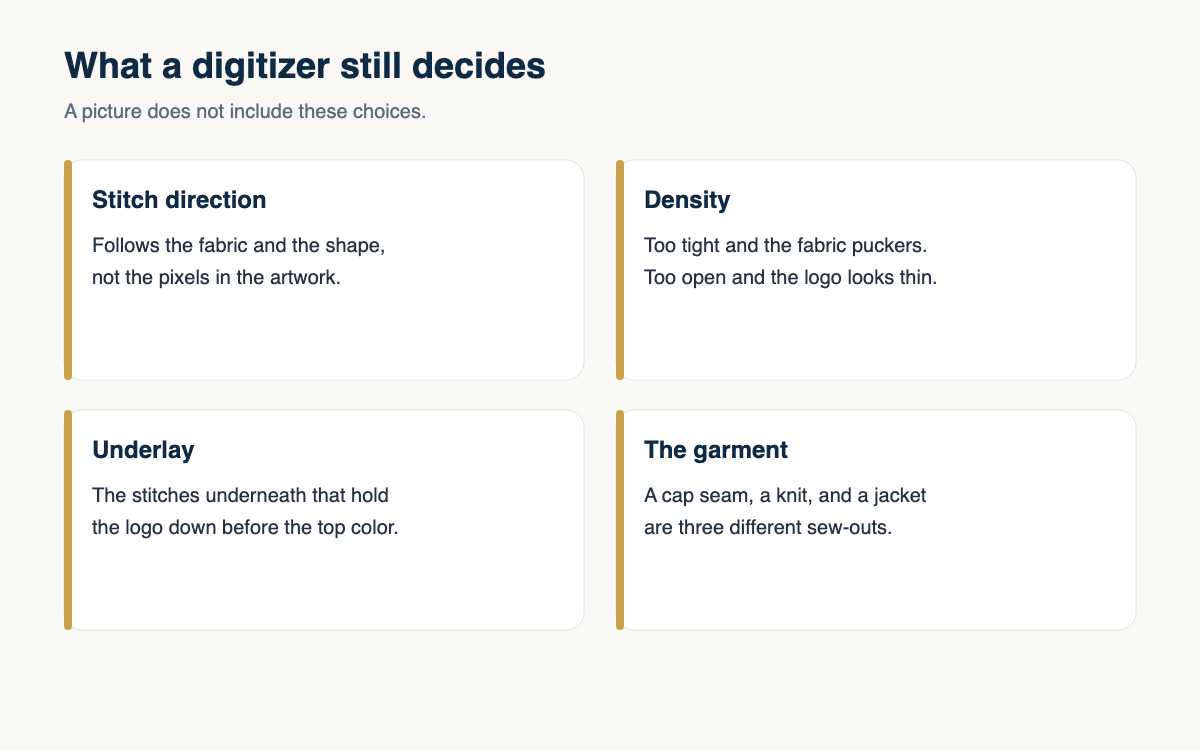
Open the file the customer calls the logo and name what you are holding. If it is a PNG, a JPG, or a PDF of shapes, you are holding art. Art does not tell the machine where to start, which layer sits underneath, or how far apart the stitches should be. You can admire the art and still not be ready to hoop. Pretty on a screen is a different test from readable at arm length on a cap.
A stitch file is the plan the machine follows. It lists needle penetrations, color changes, and the order of the elements. Underlay is in that plan or it is missing. Density is in that plan or the sew-out will speckle or go stiff. A picture can inspire the plan. The picture is not the plan, even when software traced the outlines and handed you a first pass. A person edits the stitch file before it belongs on an order.
Tiny detail and thin type will not sew
Tiny detail is the first limit you will hit. Leaves the size of a pinhead, a hairline whisker on a mascot, a star made of a few pixels, and a map of streets all look clear when the art fills the monitor. At sew size those shapes are smaller than a stitch. The machine will drop them or clump them into a blur. Circle what you are keeping, tell the customer, and delete the rest in the drawing before anyone talks about price.
Type fails in the same pass when it is thin, script, or stacked into a sentence. Satin needs a column wide enough for thread to turn and still read as a letter. A quarter inch of letter height is a common floor on a cap, and even that is tight if the font is a hairline script. A phone number, a slogan, and a tiny legal line often fail that floor. Offer a shorter word or leave the line off.
Gradients, photographs, and too many colors
A gradient is a smooth fade. Thread is a solid color on a cone. If you try to sew the fade, you get bands, speckles, or a pile of tiny color changes that look nervous on a shirt. Ask for a flat version: two or three solids that you can match to cones you already own. If the customer loves the gold glow, say you will sew a gold thread and a shadow color, not the glow itself.
Photographs have the same problem in a harder form. Skin, fur, clouds, and a sunset are continuous tone. A sew-out of a photo, left as a photo, becomes a posterized patch with stitches fighting for room. Too many colors make it worse. Each color is a stop, a trim, and a shape that needs area. Six colors in a two-inch mark usually means none of them read. Cut to the colors that still look like the subject at arm length.
Underlay, density, and whether to sew
Underlay is the stitching the customer never sees in the picture and always notices when it is missing. It gives the top thread something to sit on, covers the fabric color, and keeps a satin column from sinking into pique or a knit. Density is how tightly those stitches pack. Too tight and the cap front goes hard and the knit puckers. Too open and the garment shows through in speckles. Neither number is stored in the image. You set them for the fabric in the hoop.
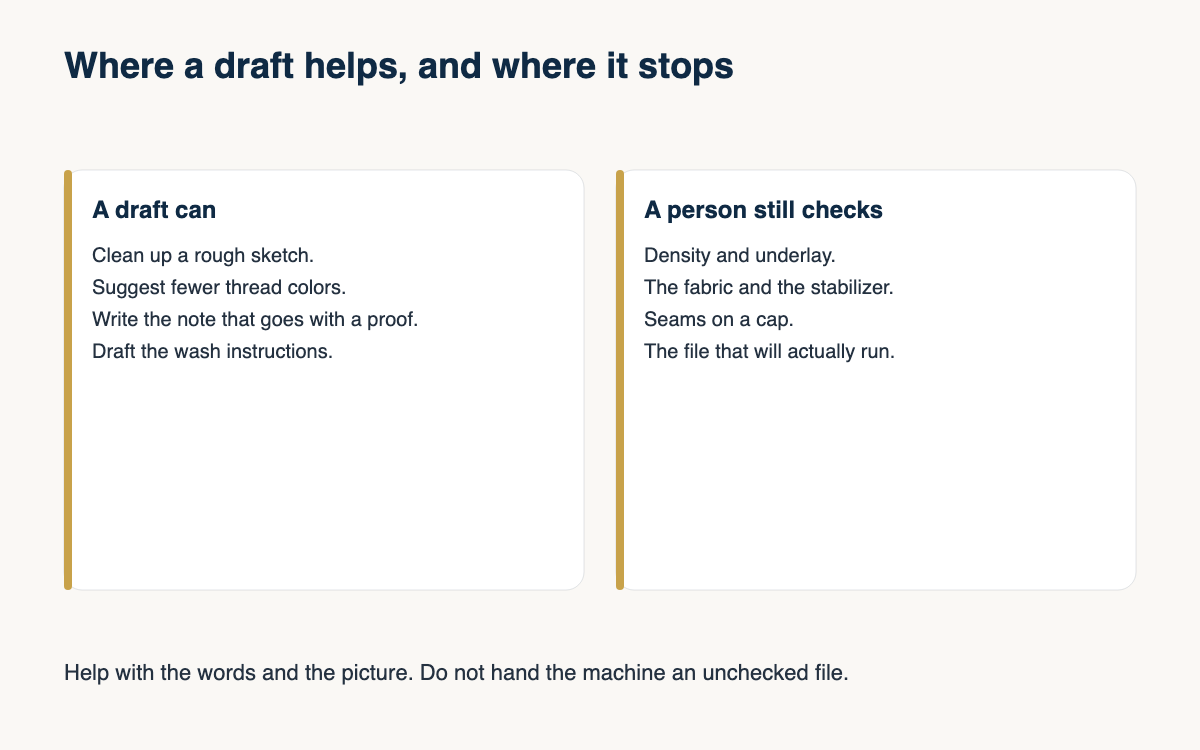
Then you decide whether the design should be sewn at all. Some pictures should stay pictures. A city seal with fifty tiny trees, a photo of a face, or a wordmark that only works at business-card size can be redrawn into a simpler mark or declined. Sew a sample on scrap of the same goods when you are unsure. If you would not wear the sample, do not sew the order. A person still has to make that call after any software has finished drawing.
What to do with the picture you were sent
Use the image tool for what it is good at. Ask it for a flat-color version, fewer shapes, thicker type, and no texture that pretends to be thread. Then stop. Bring the drawing into your digitizing software as a guide, build the stitch plan for the blank, and edit until the sequence, the underlay, and the density match the fabric.
Tell the customer what changed and why, in one short note: which lines you dropped, which colors you kept, and the size in inches. Show a preview that matches those choices. When the sample looks right, sew the order. When it does not, change the file, not the story you tell about the picture. The tool saved you a sketch. It did not sew the hat.
- Name the file as art or as a stitch file before you quote the job.
- Delete detail that is smaller than a stitch at the real sew size.
- Replace gradients with flat colors you can match to cones on the rack.
- Cut colors that will not have a readable shape at that size.
- Thicken type or drop any line under about a quarter inch.
- Redraw a photograph into simple shapes or decline it.
- Set underlay and density for the fabric, then sew a sample before the run.
An image tool is a fast pencil. Embroidery is a plan for a needle on a moving garment. Keep the pencil. Do not confuse the drawing with the sew. The shops that look consistent are the ones that redraw, edit the stitch file, and sample the odd jobs before they hit start on a stack of caps.
A question for the group
What image did a customer send that you refused to sew as it arrived, and what did you change before it went in the hoop?