
Artwork
The blank color changes the design
A mark that is clear on a white shirt can vanish on a navy cap. The fabric color is part of the design, and it decides which colors of thread you can honestly sew.
The customer approves a black logo on a white mockup, then orders navy, forest, maroon, and athletic gold. They think they ordered one design in four colors. You are looking at four different sew problems. On the white shirt the black thread is the whole drawing. On the navy cap the black thread disappears into the crown. The design did not change. The blank did, and the blank is half the picture.
Thread color is not a filter you apply at the end. It is a decision about what the fabric will contribute. A light blank can be the background, the highlight, or even a letter if you leave it unstitched. A dark blank will not outline anything. If the art depends on a color the garment does not have, you have to stitch that color, or you have to change the art.
What disappears
Navy on navy, black on black, white on white. The customer can still see the edge on a screen because the mockup adds a shadow. The sew-out will not. If the design is the same color as the blank, it needs a contrasting edge, a different thread, or a different blank. Say that when you see the product color, not when the first cap comes off the machine and looks like a bruise.
Small color differences matter too. A gold thread that glows on a photo of a black hat can look brown on a video of a navy hat. A gray that separated two shapes on white becomes mud on a heather fleece. When you only have a render, tell the customer it is a placement check, not a color match. Offer a sew sample when the order is large enough that a wrong gold will hurt.
How many colors the blank can stand
A large back design can carry several colors because each shape has room to be a real stitch area. A left chest and a cap front often cannot. Three colors and a stop for the fabric is a design. Eight colors in a two-inch mark is a stack of trims and a file that costs more than the shirt. The blank size sets the color budget. If they want every color in the original painting, they need a bigger placement or a simpler painting.
Use the blank as a color when you can. A white shirt does not need a white fill behind a dark mark. A black cap can be the background of a light crest so you are not stitching a giant oval just to hold the letters. Leaving the fabric showing is not a shortcut. It is how the design belongs to that product instead of looking stuck on.
One approval per colorway
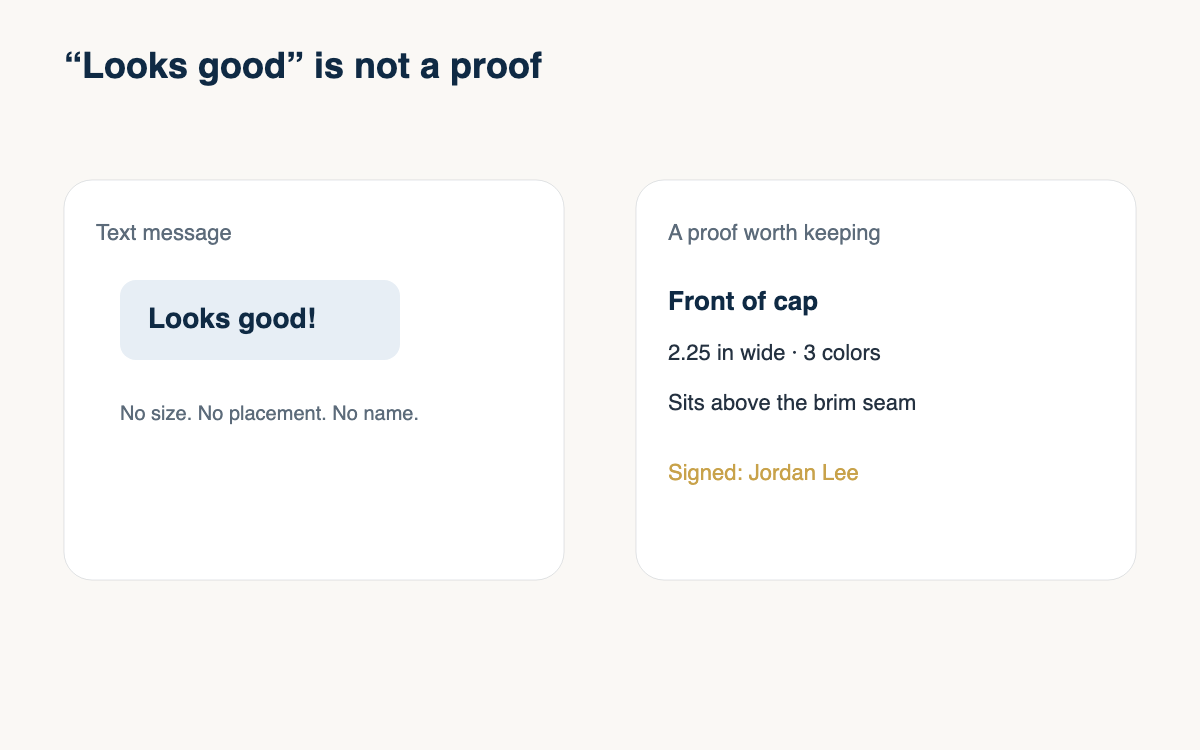
If the order is the same mark on three blank colors, show three pictures or state three thread recipes. “Approved” on the white sample does not approve the navy. You can still be efficient. Reuse the shapes. Change the threads that no longer show. Tell them which version changed and why. Customers argue when the navy cap looks different and nobody warned them. They rarely argue when you showed them the navy version and the white version as two choices.
Write the thread colors next to the blank color on the order. Navy cap, gold and white. White polo, navy only. The person hooping on Friday should not have to remember a text from Tuesday. If a colorway needs a different file because you added an outline, that file name should say the blank, not “final.”
- Look at the blank color before you pick thread.
- Add an edge when the design would otherwise match the fabric.
- Let the fabric be a color instead of stitching a background it does not need.
- Approve each colorway, or say in writing which one the yes covers.
The right design for a blank is not only the right shape. It is the right shape in threads that will still be visible on that fabric after the hoop comes off. A shop that checks color second, after the customer has already fallen in love with a white mockup, ends up either restitiching or explaining. Check it first. The blank is already in the order. It should already be in the design. When the same logo is going on a light shirt and a dark hat, plan both versions in the quote, with the threads named, so Friday is a sew and not a surprise.
Keep a short list of the blank colors you sell most and the thread pairs that have actually sewn clean on them. Gold on navy. White on black. Navy on white. Heather is its own problem. The list will not replace a proof, and it will stop you from promising a black logo on a black cap because the mockup had a drop shadow. That promise is the one that comes back in a photo with the question “where is the design?”
A question for the group
Which blank color in your shop hides a logo that looked obvious on white, and what thread change do you make before you quote it?