
The industry
Are embroidery machines getting smarter?
A newer machine can trim, show a picture, and change color with less fuss than the head you learned on. A few of those features earn the extra money every week. The rest are a higher price for a screen you will never trust. Here is how to tell them apart on the floor, before you buy.
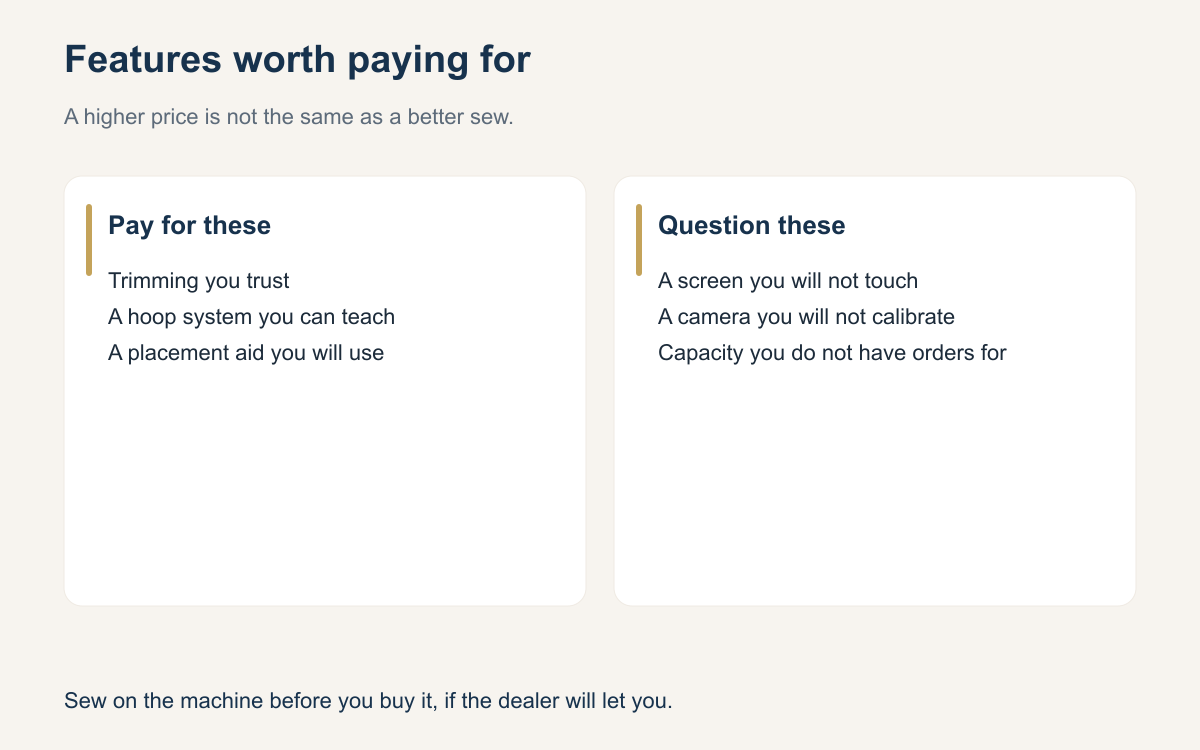
The brochure uses the word smarter for anything with a motor and a menu. On a shop floor the word should mean something stricter. A smarter machine removes a stop you currently walk over and fix with your hands. If the new head still needs you for the same trim, the same hoop, and the same guess about placement, you bought a newer cabinet.
You do not have to sneer at new equipment to stay honest. Trimmers got better. Hoop systems got easier to explain to a new hire. Cameras got real enough to help a shop that will actually set them up. Pay for the part you will use on a Tuesday in March, and treat the rest as optional.
What smarter should mean on the floor
Walk through a normal week and count the times you left another task to deal with the machine. A thread tail. A color change. A hoop that only you can load. A design that sat a little left, and you hoped the customer would not notice. Those walks are the bill a new machine is supposed to shrink. A larger touchscreen does not shrink them by itself.
Write the walks down before you shop. If most of them are trimming, you are shopping for a trimmer. If most of them are six colors on a single needle, you are shopping for needles, and that is a different decision. If most of them are a person waiting on you to approve placement, no head fixes that.
Pay first for a trimmer you trust
Reliable trimming is the feature I would pay for first. Clipping tails by hand is honest work, and it is also a tax on every color. A trimmer that cuts clean, leaves a short tail, and does not slice the garment is a daily gain. A trimmer you turn off because it misses one thread out of three is furniture.
Ask to see a bad cut, not a hero design. Dark thread on a navy cap is a fair test. So is a small letter with a short travel, where a clumsy cut leaves a nest you have to pick out. Listen for the cut and then look at the back of the goods. If the salesperson will not sew your file, believe the machine you already run until someone will.
A camera only if you will use it
A camera or another placement aid can be worth the money when you sew the same cap the same way all week and you will take the time to line it up. It can show you that the design is on a seam before you press start. That save is real on a job you would have redone. It is a picture of the hoop, and it still needs a person who will stop.
If you already place by eye and you are fast and accurate, a camera can slow you down while you argue with the screen. Be honest about that before you add it to the price. Shops that sew many different garments in a day often skip the camera after the first month because the setup takes longer than the sew. Buy it if you will build a habit. Skip it if you want it only because the demo looked clever.
A hoop system you can train
The hoop is the feature people underbuy. You can own a fine head and still be the only person who can frame a cap. That is not a smarter shop. That is a bottleneck wearing your shirt. A system you can teach in one short session, with a fixture that sits the same way every time, is worth more than a menu item you will forget by Friday.
When you test, hand the frame to someone who did not take the tour. Give one sentence of instruction and watch. If they can load a cap twice and land in the same place, you can hire for that machine. If the load depends on a feel you cannot describe, the new head did not buy you a day away from the floor. Pay for the frame you can teach.
What is mostly a higher price
Some line items are comfort and some are cost. A giant screen, a sample that only runs in the booth, a cabinet color, and a software bundle you already own in another form are easy to love for an afternoon. They do not cut a thread. A connection you will not plug in is the same kind of purchase. If the feature does not remove a walk you wrote down, put it on the optional list and look at the price without it.
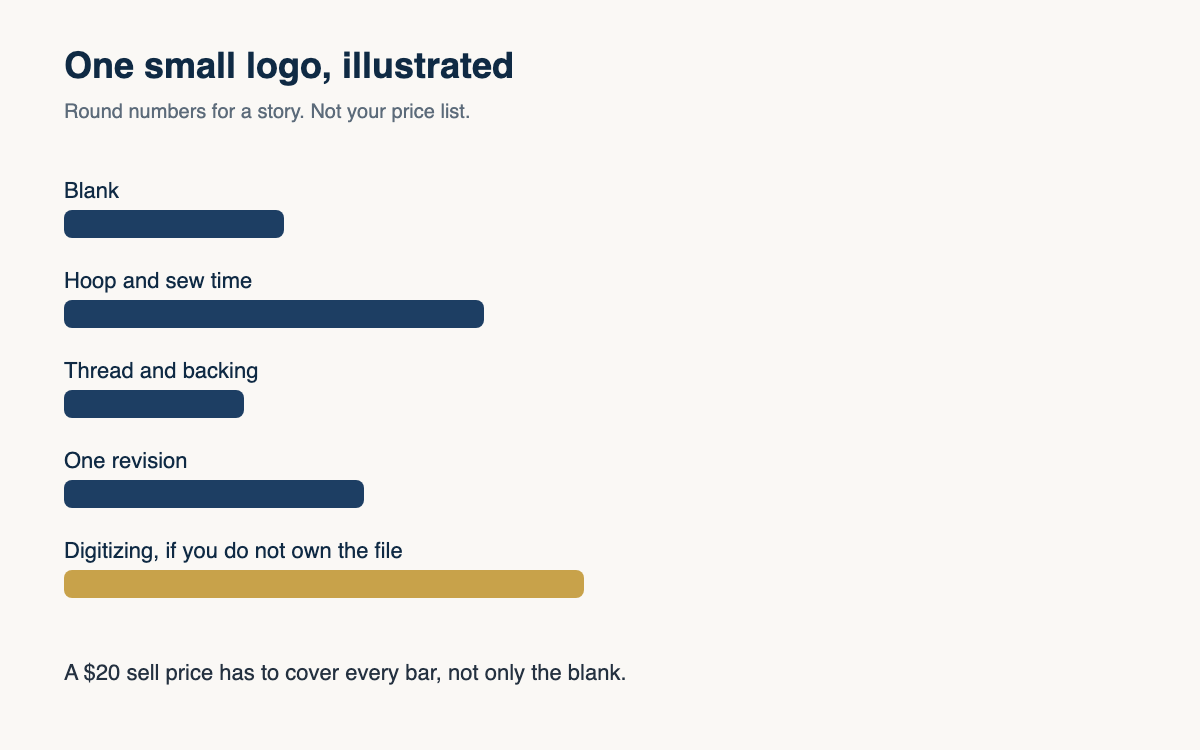
I will not state a model price as if a current sheet were in front of me. Use this only as an illustration. Suppose the camera and the larger screen add a few thousand to a head that already trims well. Divide that extra by the jobs you sew in a year. If you cannot point to a redo those dollars would have prevented, you are paying for a feeling at the booth.
How to test a machine before you buy
A useful test is a little rude. You are not there to be impressed. You are there to see your work on that machine. Call ahead and say you will bring a file and a cap. A dealer who wants the sale will allow it.
Sew the design twice. The first run shows that the head can sew. The second shows that placement repeats. Check the trim between colors yourself. Write down the time from hoop on to hoop off, because a speed number on a sticker is not the time you live with. Compare that time to the machine you already own, on the same file, before you talk yourself into a payment.
- Bring a file you actually sew, not the design sitting in the booth.
- Sew a cap if you sell caps. A flat demo hides the curve and the seam.
- Time a four-color design, including every trim and every rethread.
- Ask a person who skipped the tour to hoop one item with one sentence of help.
- Look at tail length on dark thread, then look at the back of the goods.
- Get the price with and without the camera, in writing. Call any monthly figure an illustration until you hold your own quote.
Machines did get more helpful in the places that touch the thread and the hoop. That is the part worth paying for. The rest of the smart is a menu. If you are shopping this year, take your own file, time the real stops, and let a newer person try the frame.
A question for the group
Which feature on a new machine have you paid for and then never used, and which one actually took a daily chore off your hands?