
The industry
Are embroidered hats still worth it?
Hats are still worth it when you are paid for the hoop time and the customer will reorder. They stop being worth it when a common trucker becomes a race and one machine spends the day on the cheapest cap. The math is blank, sew time, and demand.
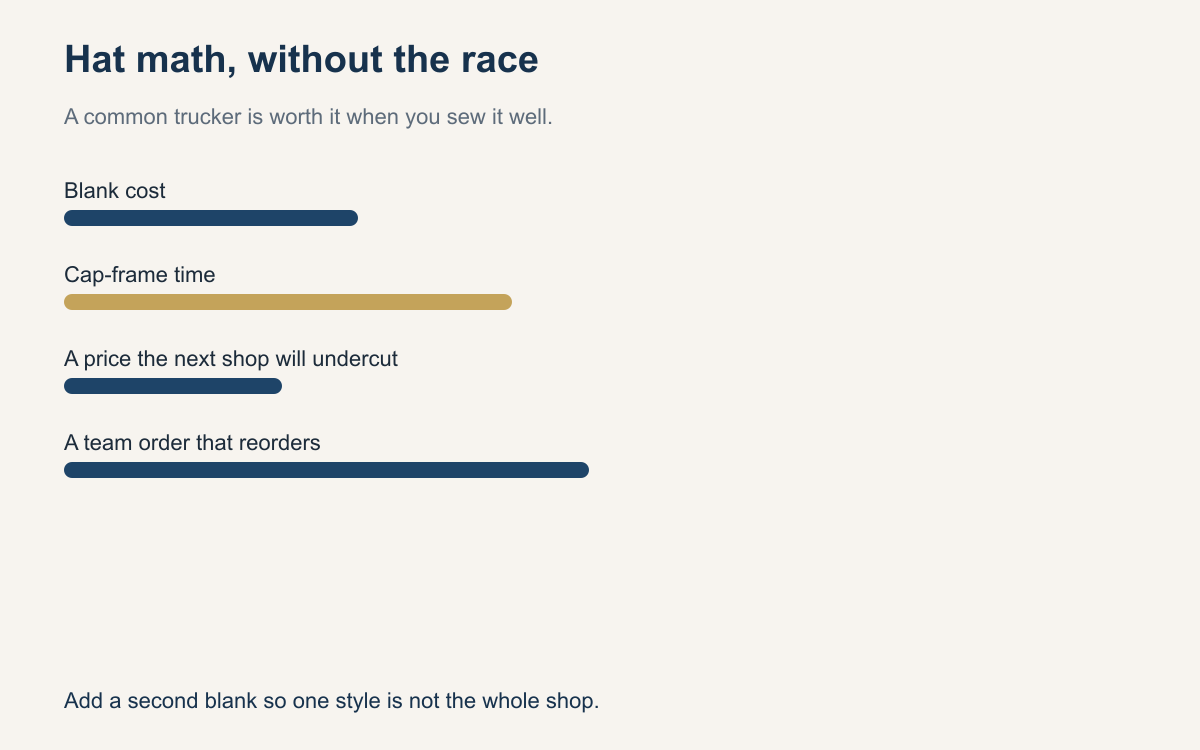
Hats are not over. They are also not a free pass. A cap frame is slower than a flat hoop, the front is full of seams, and every shop in town can buy a similar trucker. If your price ignores those facts, you will be busy and still short at the end of the month. Busy is not paid.
The question is not whether people still wear embroidered caps. They do. The question is whether your shop should sew the cap they are asking for, at the price they heard from someone else. Sometimes yes: a local team, a style you sew clean, a reorder you already know. Sometimes no: a stranger who wants the common trucker for less than your hoop time.
Start with the hour, not the hat
A hat order feels small, so shops price it like a small thing. The customer sees one cap. You see a frame change, a seam, a curve, thread, and a person who has to stop another job to hoop it. If you sew three hats between shirt orders, the setup is most of the cost. Price the situation you actually have.
Pick an hourly number you want the machine and the operator to clear. Call it yours, not a national average. Then ask how many caps at your current price it takes to hit that number in an hour, after blanks and thread. If the answer is a pile you cannot physically sew, the price is a wish. Hats are worth it when the hour works. They are a hobby when the hour only works if nothing goes wrong.
Blank cost is public
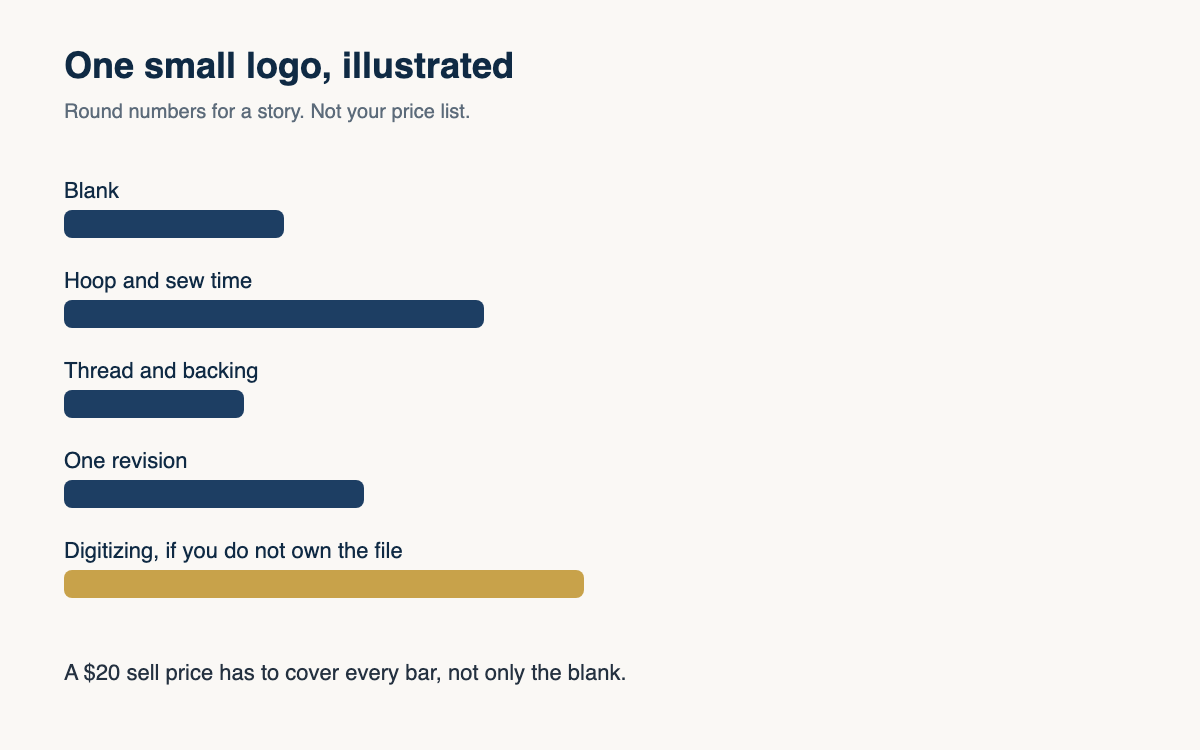
A common trucker has a price your customer can find. You are not hiding a rare blank and unveiling it. Your margin lives in the sew, the convenience, and the fact that you will stand behind the stitches. If you talk as if the blank were the craft, a buyer with a phone will argue you down to a number that leaves the needle unpaid.
Use an illustration, not a quote you found on a forum. Say the blank is a few dollars and the finished cap is a bit more than twice that. The gap has to cover hooping, sewing, thread, a mistake, and your time. If that gap is thinner than the rate you chose for the frame time, you are donating the sew. Write your real blank cost next to your real price before you call the hat program healthy.
Cap-frame time is the hidden line
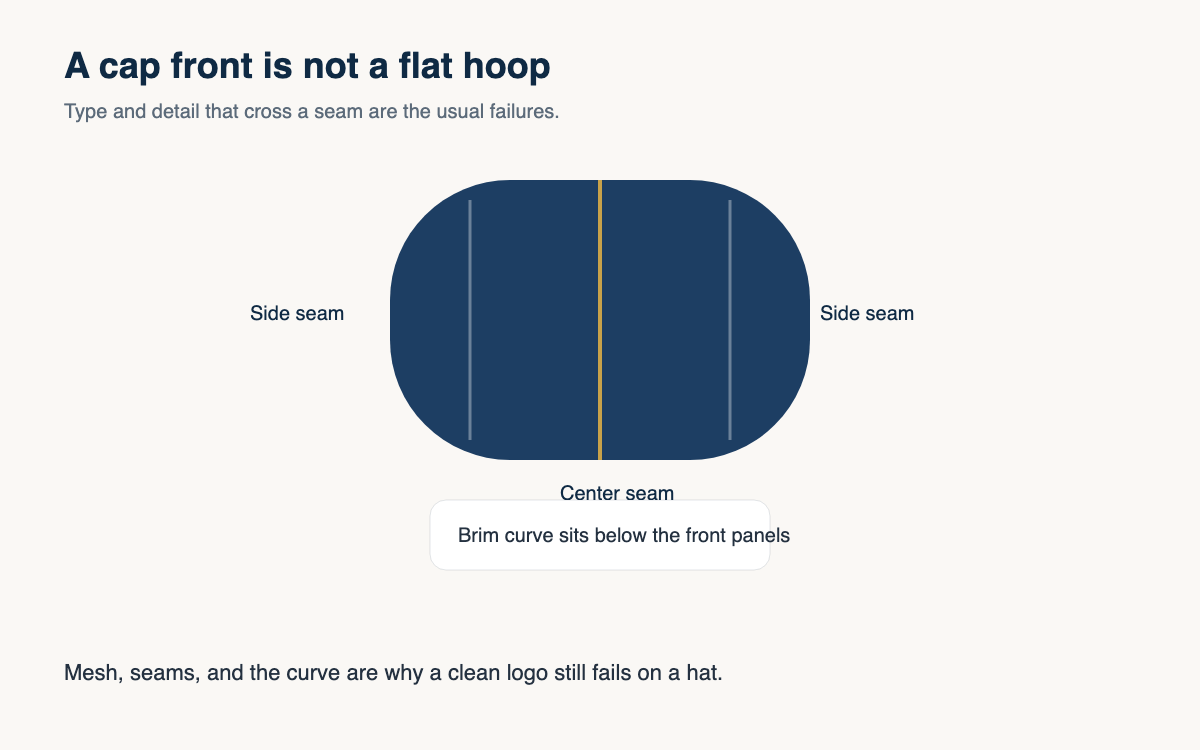
Machine speed is not the job. On a cap you clamp, you mind the center seam, you watch the curve, and you often sew slower than the same design on a polo. A design that the screen calls six minutes can take twice that once the frame is honest. If you quote from the stitch count alone, you will underprice every hat and then blame the customer. They accepted the number you gave them.
Time ten real caps, not a demo. Include the moment you pick up the blank to the moment it is on the finished shelf. Do it for a one-color wordmark and again for a design with several colors. The second number is the one that hurts a single-needle shop, because every color is another stop on a frame that was already fiddly. If you do not know those two times, you do not know whether hats are worth it.
A race to the bottom hurts one machine
Someone in town will sew a one-color trucker for less. They may have more heads, a lower rent, or a habit of losing money. If you match them on one machine, you fill the day with the least paid work you offer. The cap you could have sewn for a team at a fair price waits. A one-machine shop does not have a spare tomorrow. The race is a capacity problem.
You can lose the race on purpose. Publish a price for a simple cap that still pays the hour, and let the cheaper job go. Say what the price includes: your blank, your sew, a placement you will stand behind. Buyers who want the cap done right, in a color you stock, will pay if you do not flinch.
When a hat is still the right product
Hats are the right product when you sew that style well and the customer is close enough to reorder. A local team that wants twenty caps for a season, then twenty more when the roster changes, is a good hat customer. A company that already buys shirts and adds caps for the crew is a good hat customer. You know the front, you know the seam, and you are not inventing a new relationship for a thin margin.
They are also right when the style matches your skill. If your cleanest work is a small front mark on a structured cap, sell that. Do not apologize for it. If hats still look slightly crooked, stop using them as the lead offer until the sew-out is something you would wear. A product you sew almost well is the one people remember.
When to add a second blank
Add a second blank when every hat conversation collapses to one famous trucker and the only lever left is price. A second shape gives you a way to sell a look. A lower profile, a different crown, or a cap without a mesh back lets a buyer choose something other than the cheapest version of the hat everyone stocks. You are refusing to let the first blank be the only sentence you can say.
Test the second blank on purpose. Sew your most common small logo on it and hand it to a customer who already buys. Check the seams and whether you can get the color again. If the buyer likes having a choice, raise the mix. A shop stuck on one blank is one backorder away from a discount.
- Write your blank cost next to your finished price before you call the program healthy.
- Time a real cap from pickup to the shelf, for one color and for several colors.
- Keep a price that pays the hour even if a cheaper shop posts less.
- Say yes to local teams and crews who reorder the style you sew clean.
- Say no to strangers who want the common trucker below your hoop time.
- Add a second blank when the only argument left on the first one is price.
Embroidered hats are worth it when the frame time is in the price and the customer has a reason to come back. They are a slow leak when you match the cheapest trucker. One machine can sew a lot of caps. It cannot sew a lot of underpaid caps and still be a shop. Keep the hats you are proud of.
A question for the group
What is the cheapest hat price you have matched, and did that job actually pay for the hour once the frame time was honest?